
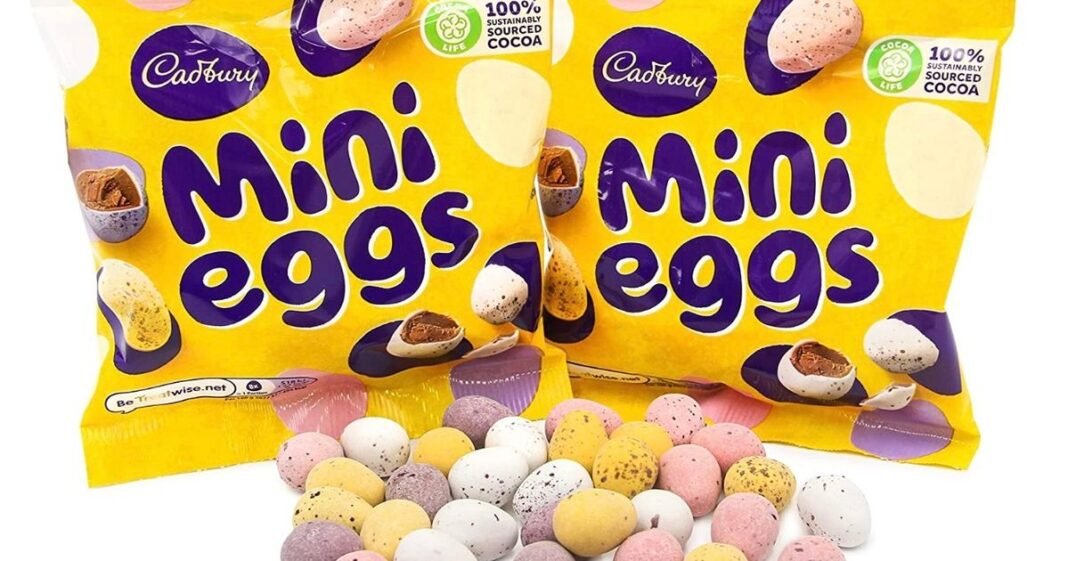

Cadbury has recently reduced the size of its Mini Eggs bags while maintaining the original price, causing dissatisfaction among customers. The bags, which were previously 80g in early 2025, are now downsized to 74g, yet the cost remains around £2.
This trend, known as shrinkflation, involves a reduction in product size without a corresponding decrease in price. Prices for Cadbury Mini Eggs may differ depending on the retailer, with variations such as £2.36 on the Cadbury website, £2 at Morrisons, and £1.74 at Asda. Consumers have expressed frustration over the size reduction, with one individual taking to social media to voice their discontent.
Mondelez International, the owner of Cadbury, cited increased production costs as the reason behind the size adjustment. Rising expenses for ingredients like cocoa and dairy, as well as elevated energy and transport costs, have led to higher manufacturing expenses. The company emphasized its commitment to preserving product quality while remaining competitive in the market.
In a similar scenario, Quality Street also experienced a reduction in weight from 600g to 550g during the holiday season. This change has sparked discussions among experts and consumers, including food policy analyst Gavin Wren, who raised concerns about the continuous downsizing of popular products.
Nestle, responding to inquiries about Quality Street, explained that product sizes and prices are determined based on manufacturing costs, ingredient prices, and customer preferences. The company defended its 2025 product range and pricing as competitive and reflective of consumer demands, with final prices set by individual retailers.
As the debate on product shrinkage continues, companies are balancing cost pressures with consumer expectations to maintain competitiveness in the market.