
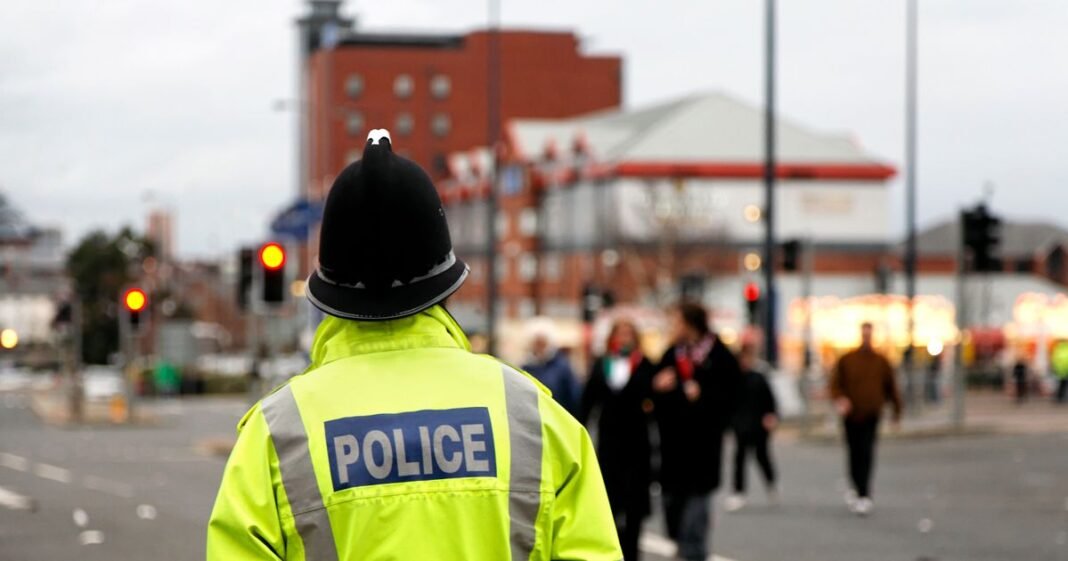

The Home Office has unveiled a significant revision to current policing protocols due to concerns that the current framework is inadequate. This alteration specifically pertains to the legal standard used to assess the use of force in high-stress situations, aiming to protect officers from repercussions for genuine errors.
Presently, police officers’ application of lethal or other forms of force in misconduct cases is typically evaluated using a ‘civil law test,’ which usually offers little leniency for unintentional mistakes. This will now transition to a ‘criminal law test,’ requiring officers to demonstrate that they genuinely believed their use of force was justified when acting swiftly in perilous circumstances.
The adjustment, disclosed on Friday, was suggested by an independent evaluation led by Sir Adrian Fulford PC and Tim Godwin OBE QPM and endorsed by the Home Office. Reviewers contended that previous legal cases had hindered police officers’ confidence in using force effectively by complicating their decision-making processes.
In response to the review, Metropolitan Police Commissioner Sir Mark Rowley stated: “It is crucial for police officers to be held accountable for their actions, but the oversight system must be fair, consistent, transparent, and prompt. Too often, they endure prolonged periods of uncertainty, undergoing multiple legal processes and hearings, and being assessed against varying standards to justify split-second decisions made in challenging circumstances.”
“The reform is not just about fairness; it is about public safety. An accountability system that is unfit results in officers shying away from demanding roles or fearing repercussions more than the criminals they confront, ultimately compromising community safety.”
“I welcome the recommendations of this review. While officers must still exercise necessary, proportionate, and reasonable force in all situations, they can now have greater assurance that they will be evaluated against a consistent standard based on their genuine beliefs at the moment, not retrospective judgments made long after an incident.”
Although the criminal law test had been utilized in misconduct cases previously, a 2023 Supreme Court ruling mandated the use of the civil test instead. However, the recent review argued that this change had caused confusion and inconsistency, adversely affecting police morale, particularly among firearms officers.
The new legal modification for using force in misconduct cases will encompass all instances where a police officer deploys force, whether in self-defense or in defense of others. The Government will propose legislation to amend the use of force assessment after consulting with the Police Advisory Board for England and Wales, as required by law, once the parliamentary schedule allows.
Additionally, the review recommends that the Government conduct a public consultation on the standard of proof applied in unlawful killing inquests. Minister for Policing and Crime Sarah Jones added: “Our courageous police officers must make rapid decisions when faced with danger to safeguard the public. It is essential for them to act decisively in those moments. These adjustments will empower officers to ensure community safety while ensuring accountability for those falling short of expected standards. This is a pivotal step in restoring public trust in our police force.”
For further details, visit GOV.UK here.