
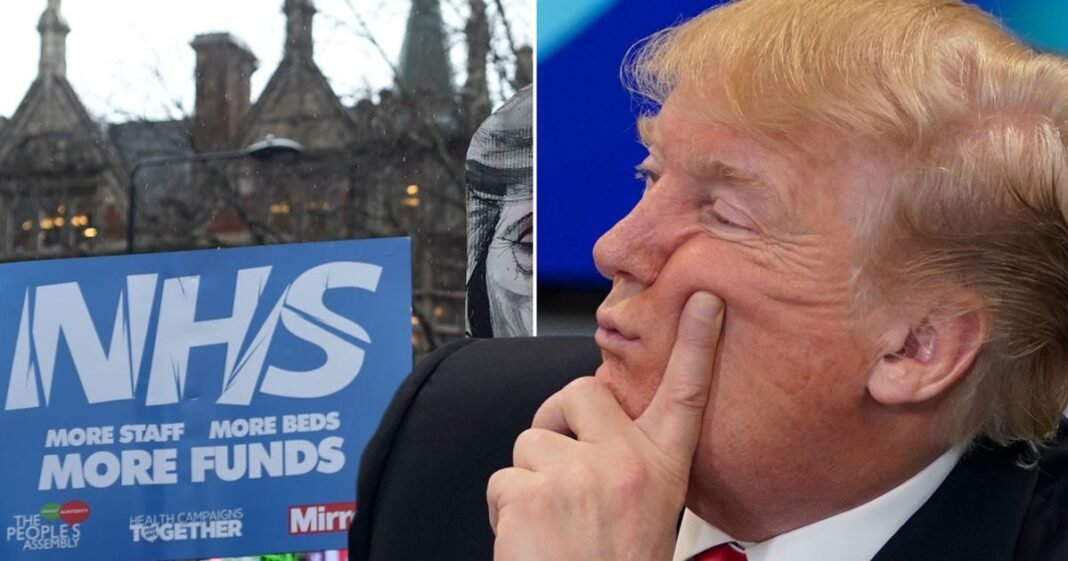

Health leaders have cautioned that Donald Trump’s insistence on higher medicine costs for the NHS could lead to job losses and longer patient waiting times. The NHS Confederation and NHS Providers have expressed concerns that the current budget does not account for the expenses related to redundancies, strikes, and increased medicine prices, jeopardizing Labour’s NHS recovery efforts. The proposed 25% increase in drug “value for money” thresholds is projected to create a significant deficit in the NHS budget, resulting in extended treatment wait times for patients.
The threat of substantial tariffs on drug imports by President Trump has prompted pharmaceutical companies to withdraw investments in the UK, citing the NHS’s negotiation of low drug prices as a key reason. NHS Providers’ chief executive, Daniel Elkeles, emphasized the critical decision the NHS faces in balancing financial books or risking service cuts and deficits. Matthew Taylor, chief executive of the NHS Confederation, highlighted the potential impact of unforeseen expenses on waiting time targets and essential NHS reforms.
Anticipated negotiations with the US regarding higher medicine prices could impose an additional cost of approximately £1.5 billion on the NHS, exacerbating existing funding shortfalls. This financial strain, coupled with potential staff redundancies and planned strikes, could result in patients enduring prolonged wait times for care. NHS leaders fear that under financial constraints, certain services may need to be rationed, impacting treatments like IVF procedures.
The looming financial challenges have prompted a stricter review of NHS procedures and a reassessment of non-life-saving interventions. Chancellor Rachel Reeves is set to disclose the UK’s autumn budget, with ongoing discussions between Health Secretary Wes Streeting and the Treasury. Despite the government’s substantial investment in the NHS, including digital and technological advancements, health leaders stress the importance of adequate funding and necessary reforms to sustain the health service effectively.
Data from the NHS reveals a 5.8% increase in activity among acute hospital trusts in England, with a corresponding 3% rise in costs and a 2.7% growth in overall productivity. However, progress in addressing the backlog of routine hospital treatments has stalled, indicating a precarious situation for the NHS’s recovery. The waiting list for hospital treatments in England surged to 7.41 million, underscoring the pressing need for strategic action to alleviate the strain on the healthcare system.
NHS leaders are commended for their efforts in enhancing productivity and activity levels, despite facing financial constraints that hinder optimal performance. The lack of upfront funding for necessary redundancies poses a challenge to achieving long-term savings, requiring government support. As the government prepares its budget, transparent discussions are urged to assess the NHS’s capacity to meet ambitious health targets amidst challenging financial circumstances.