
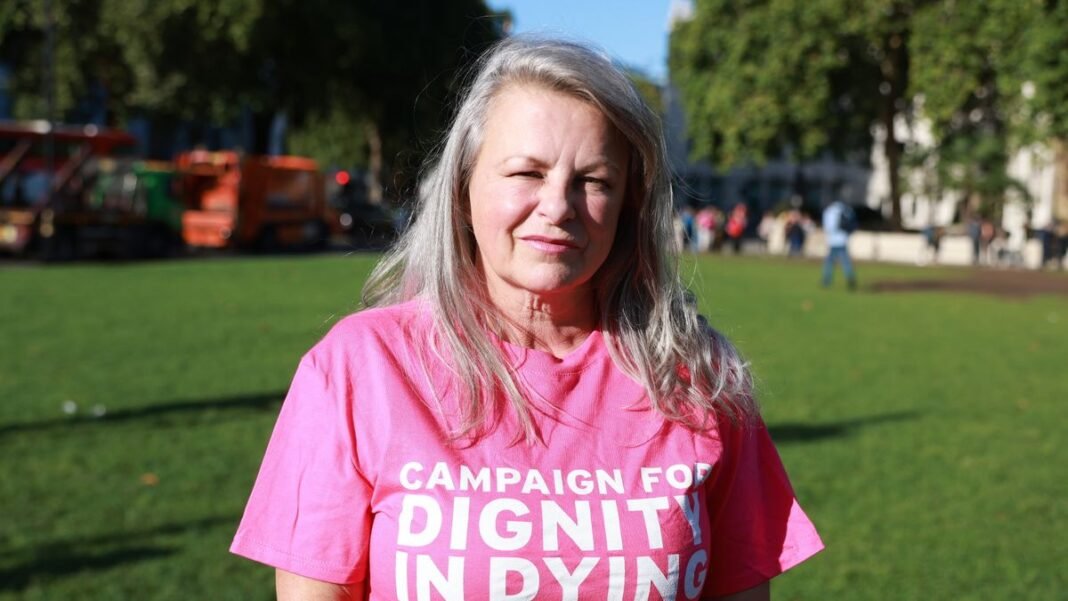

A woman who faced police scrutiny for accompanying her husband to Dignitas is calling for broader access to assisted dying services beyond the wealthy. Louise Shackleton, who went through a challenging 10-month investigation, has emphasized the need for inclusive legislation regarding end-of-life choices. Shackleton’s plea comes as the House of Lords reviews a proposed bill allowing terminally ill individuals in England and Wales the right to die.
Highlighting the existing class disparities in accessing assisted dying, Shackleton stressed the importance of extending this option to all individuals, not just the affluent. She shared her late husband Antony’s battle with motor neurone disease and his desire for a dignified death. Shackleton recently revealed a heartfelt letter from her husband, expressing gratitude for her support and love.
While the Terminally Ill Adults (End of Life) Bill progresses through Parliament, Shackleton emphasizes the necessity of ensuring equal access to end-of-life choices. The proposed legislation would mandate approval from medical professionals and a multidisciplinary panel for assisted dying applications. If the bill is passed, implementation of an assisted dying service could occur by 2029/30.
Shackleton criticized the current law as oppressive, questioning the state’s right to dictate individuals’ suffering. Despite opposition from some peers, the bill’s advancement signifies a significant step towards legalizing assisted dying in England and Wales. The scrutiny committee will further assess the bill, considering expert opinions and potential implications on vulnerable populations.
North Yorkshire Police concluded that prosecuting Shackleton was not in the public interest, underscoring the complexity of the case. The Crown Prosecution Service determined that legal grounds for prosecution were not met, leading to no further action. The ongoing debate surrounding assisted dying reflects evolving societal attitudes towards end-of-life choices and compassionate care.