
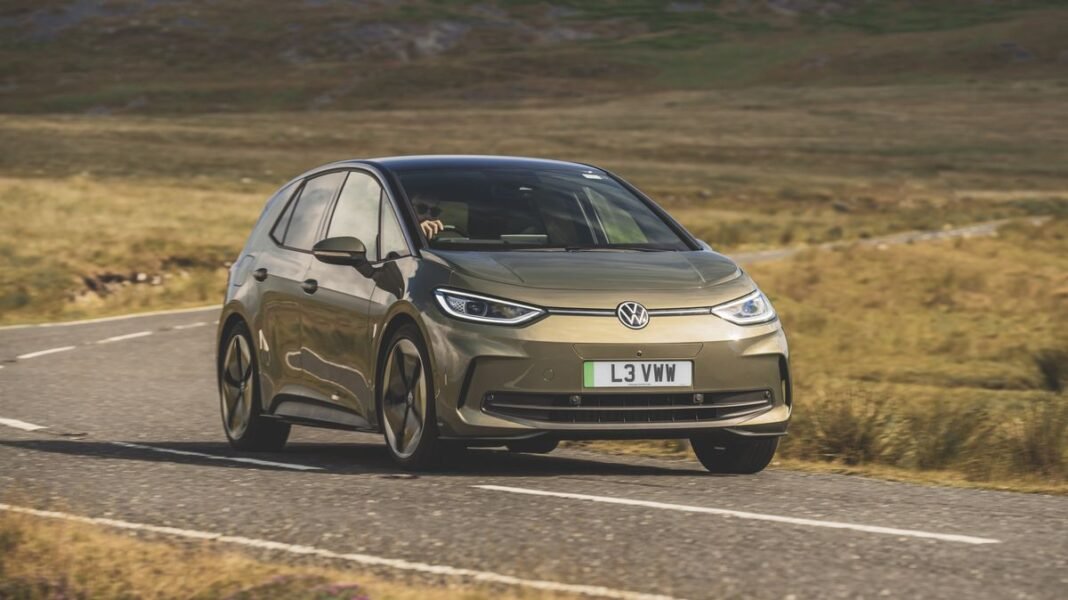

New findings from MoneySuperMarket’s car insurance specialists indicate the average yearly insurance costs for popular electric vehicle models. According to the Electric Car Index, the Volkswagen ID 3 Family 204 emerges as the most cost-effective electric car to insure, with a typical annual premium of £478. Following closely are the Volkswagen E-UP! and MINI Cooper S Level 3.
Conversely, the Tesla Model Y, including both standard and long-range variants, and the Mercedes EQC 400 AMG are among the more expensive models to insure, with an average annual premium of around £1,110. While smaller cars like the Volkswagen E-UP! and Nissan Leaf have traditionally been more affordable to insure, the latest data suggests that SUVs and larger crossover electric vehicles are becoming increasingly budget-friendly.
The latest data for 2024 highlights a shift in the market dynamics over the past six months, with the top 10 list dominated by hatchbacks and compact city car models. The emergence of models such as the Skoda Enyaq and MG Motor MG4 indicates a shift in consumer preferences.
MoneySuperMarket’s statistics indicate that the average annual premium for an electric vehicle in 2025 stands at £587, with diesel cars costing £538 and petrol vehicles £501 to insure. Notably, the Volkswagen ID 3 offers the most economical premium at £478, representing a 19% saving compared to the average for electric vehicles, while the Volkswagen E-UP! at £487 presents a 17% discount against typical electric car insurance rates.
Alicia Hempsted, a car insurance expert at MoneySuperMarket, noted that electric cars are often perceived as having higher insurance costs, but the rankings illustrate a narrowing gap. Models like the Volkswagen ID 3, Volkswagen E-UP!, and MINI Cooper S feature insurance costs below the national average, making them appealing options for drivers considering a switch to electric vehicles with lower operational expenses.
Furthermore, insurance costs have seen a decline this year, with average premiums for electric vehicles following suit, decreasing by £137 from the previous EV Index report. This trend places electric vehicles nearly on par with petrol and diesel vehicles in terms of insurance costs.
Historically, electric vehicles have commanded higher insurance premiums compared to traditional petrol or diesel cars. Research from Thatcham indicates that insurance claims for EVs cost 25% more than those for conventional fuel cars, with repair times extended by 14% for electric motors.
Several factors contribute to the higher insurance costs for electric vehicles, including limited claims information, complex repair processes, heightened repair costs, and susceptibility to keyless theft. The latest figures show a genuine decrease in EV insurance expenses, with even the priciest models experiencing a reduction of nearly £200 compared to 2024 figures.
Alicia Hempsted anticipates further reductions in electric car premiums over the coming years due to increased EV adoption, growing claims data, advancements in technology reducing write-off risks, and more cost-effective repair solutions. These factors combined are expected to align EV insurance costs with those of petrol and diesel equivalents.