
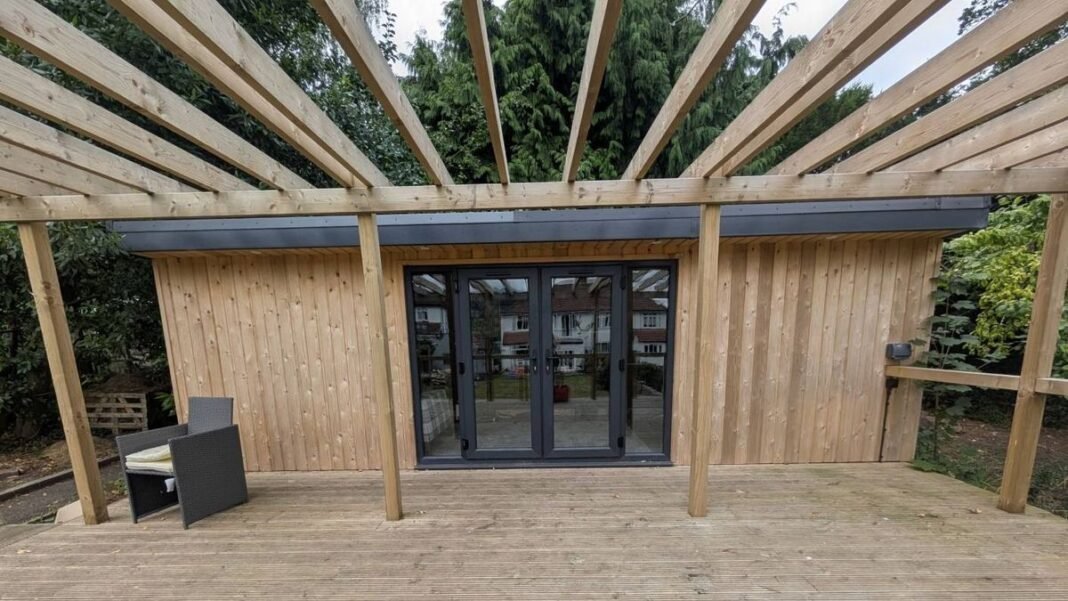

A couple in Monmouth, Wales, has been instructed to erect a fence to obstruct their neighbors’ view following the construction of a lavish shed in their garden without the necessary planning permission. The shed, featuring a floor-to-ceiling glass door and a timber pergola covering a vast 22ft decking area, was built on the grounds of a former greenhouse in September 2023. It is furnished with a sofa and workstations.
Complaints were raised by neighbors regarding the height of the structure, prompting intervention from the local council. After a planning meeting, the couple was directed to install a ‘privacy screen’ to shield the shed from the view of their neighbors. The applicant, Llinos Ndlovu, explained that the narrow room, measuring 2.74 meters from front to back, was intended for her and her husband to use as a home office.
She assured authorities that the shed, positioned approximately 30 meters from their residence at the elevated end of their sloping garden, would solely serve as office space with basic amenities like electricity and internet access. The couple became aware of the planning permission requirement only after being contacted by the planning department of Monmouthshire County Council earlier in the summer, following a tip-off from a local resident.
In response, they submitted a retrospective planning application for the shed and decking, which garnered objections from six parties while two neighbors supported the application. Councilor Steve Garratt requested a detailed examination of the application’s impact on the neighborhood’s amenity.
The objecting neighbors criticized the shed for being excessively tall and imposing, expressing concerns about potential future commercial use. The planning officer, Helen Etherington, recommended approval with conditions, highlighting that the sloping terrain made the shed appear taller from certain viewpoints, necessitating a privacy screen along the boundary with the neighboring property.
Addressing worries about commercial activity, Etherington clarified that the permission granted was strictly for residential ancillary use.