
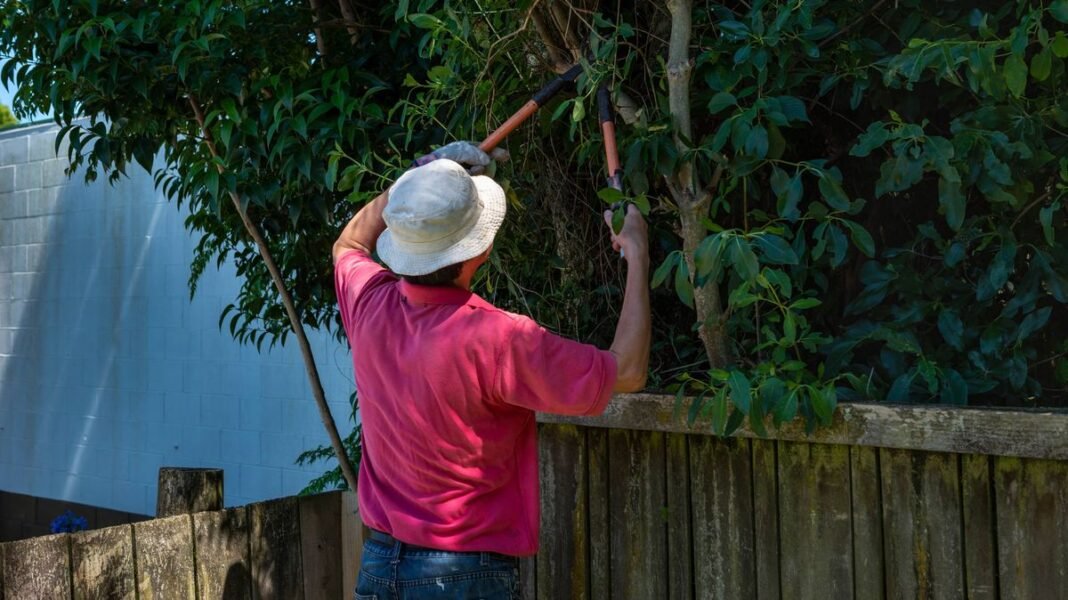

As fall approaches and we store away our outdoor furniture, many of us are beginning to notice details in our gardens that went unnoticed during the lively summer season.
The warmer weather of summer prompted significant growth in our gardens and surroundings, potentially causing branches from a neighbor’s tree or hedge to encroach on our property. While this might not have been a concern during the summer months when we were enjoying the blooming flowers and outdoor activities, it is becoming more apparent with the arrival of autumn.
Experts in law and property were consulted regarding what actions could be taken if a neighbor’s tree started to invade a garden. The consensus among them was clear.
Jagdeep Sandher, partner and head of civil litigation at Blythe Liggins Solicitors in Leamington Spa, Warwickshire, emphasized that if a tree trunk is situated on the neighbor’s property with branches extending over onto your land, you are within your rights to trim back the branches up to the boundary line. It is important to engage in a conversation with the neighbor before trimming the tree to maintain good relations.
Dave Sayce, co-founder and managing director of Compare My Move, confirmed that pruning a neighbor’s tree is permissible if leaves, foliage, or branches cross the property boundary. However, any trimming should not extend beyond the boundary line to avoid trespassing.
Dean Meadows, principal arboriculturist and tree risk management lead at Arbtech, highlighted that under UK law, homeowners have the right to trim branches and roots from a neighbor’s tree that encroach onto their property, provided the tree is not protected by tree preservation orders or other regulations. Proper disposal of the cuttings is essential, and any costs incurred for tree maintenance typically fall on the homeowner requesting the work.
In the event of a boundary dispute with a neighbor over a tree, it is advisable to verify property ownership through relevant documentation and engage in respectful communication to address the issue amicably.
To prevent and resolve neighborly conflicts, David Joyson from Homeprotect recommends the following steps:
1. Communicate kindly to address issues effectively.
2. Choose battles wisely and understand that minor inconveniences are part of community living.
3. Avoid retaliation and maintain composure when discussing concerns with neighbors.
4. Keep records of ongoing issues and seek legal advice if necessary.
5. Consider insurance options with legal coverage for potential disputes that may escalate.
By following these guidelines, homeowners can navigate neighborly disputes with tact and understanding to maintain harmonious relationships within the community.