
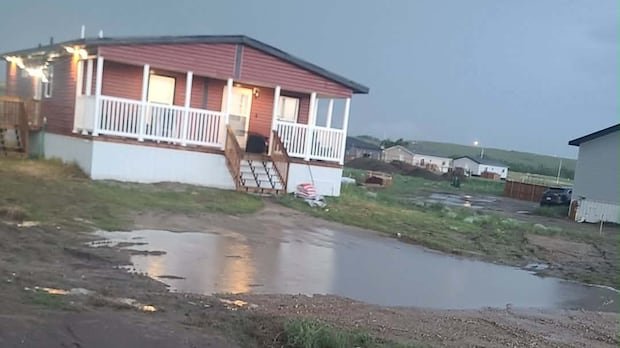

Vanessa Big Eagle, a band councilor overseeing housing for the Pheasant Rump Nakota First Nation, faced significant damage to her own residence due to severe weather conditions. She described the unprecedented winds in May as particularly disruptive, with 23 out of 54 homes in her community sustaining damage, most notably her own house which suffered extensive roof loss.
Insurance claims have been filed for the affected homes managed by the First Nation, with many still in a state of disrepair, necessitating one family to seek temporary accommodation in a hotel. Big Eagle questioned the sustainability of this recurring pattern, wondering if such weather-related events should now be factored into their budget planning.
Recent data indicates a surge in insured losses in Saskatchewan attributed to severe weather occurrences, potentially leading to an increase in insurance premiums. Catastrophe Indices and Quantification Inc. reported that Saskatchewan experienced its highest recorded insured losses from severe weather events last year, totaling $450 million, the most significant amount since data collection began in 2008.
The extreme winds in June resulted in the highest insured loss from a single event in the province, amounting to $240 million, with the previous year also marked by substantial losses due to northern wildfires. Laura Twidle, the president of Catastrophe Indices and Quantification Inc., emphasized the severity of the past two years in terms of insurance losses.
Jason Thistlethwaite, a professor at the University of Waterloo’s School of Environment, Enterprise, and Development, highlighted the potential impact on insurance rates, suggesting that even properties unaffected by recent disasters could face higher premiums and reduced coverage. He stressed the importance of prioritizing measures to prevent property damage rather than solely focusing on post-disaster recovery efforts.
In response to the escalating demand for repairs following extreme weather events, companies like Leeway Mechanical Inc. in Oxbow, Saskatchewan, have noted a significant increase in service calls. The surge in damaged properties has led to a heavier workload for repair companies, with instances ranging from water extraction in basements to roof repairs and other related damages.
Chris Kaban, operational manager at Fire & Flood restoration company, reported a rise in service requests, particularly in response to weather-induced basement flooding. The company’s workforce has expanded from 85 to 150 employees over the past few years to address the growing demand for restoration services, attributed in part to the increase in severe weather incidents.
Overall, the surge in extreme weather-related damages is posing challenges not only to homeowners and communities but also to insurance providers and repair companies, underscoring the need for proactive measures to mitigate climate risks and minimize future losses.
[Image credits: Images provided by Vanessa Big Eagle and Fire & Flood]