
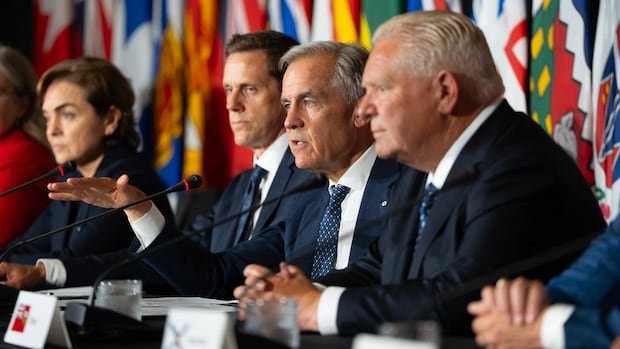

Canadian negotiators are concerned that they may not be able to prevent new U.S. tariffs from being implemented on Wednesday. Ottawa is facing challenges in securing relief from Washington on current sectoral tariffs and convincing provinces to lift restrictions on American alcohol. Negotiations between Canada and the U.S. have been progressing, with Trade Minister Dominic LeBlanc meeting U.S. Trade Representative Jamieson Greer virtually for the third time in less than a week.
The primary objective for Ottawa has been to negotiate a comprehensive agreement with the U.S. The Canadian government aims to have the Trump administration withdraw the impending 50 percent tariffs on approximately $28 billion worth of Canadian goods, representing about five percent of Canada’s exports to the U.S. Additionally, part of the deal includes reducing existing sectoral tariffs affecting industries like steel, aluminum, auto, and lumber. Currently, steel and aluminum face 50 percent tariffs, while autos face 25 percent tariffs.
To gain provincial support for the agreement, Ottawa needs to address the issue of American alcohol sales in Canada. The Trump administration insists on the resumption of U.S. alcohol sales in Canada as a crucial aspect of the negotiations. However, disagreements persist between the two countries on various unresolved matters.
Provinces are hesitant to lift their bans on American alcohol until relief is offered on tariffs affecting their local industries. This stance complicates the negotiation process, raising concerns that an agreement may not be reached if provincial opposition persists. Sources reveal that Canada is prepared to make concessions in areas such as provincial bans on U.S. alcohol, dairy import quotas, and retaliatory tariffs on U.S. autos as demanded by the Trump administration.
The federal government emphasizes the importance of resolving these disputes to avoid the implementation of new tariffs. Provinces’ cooperation is vital for the restoration of American alcohol sales, as the decision to lift bans lies with the provinces. Disagreements among provinces add further complexity to the negotiations, with only some provinces, like Alberta and Saskatchewan, resuming U.S. alcohol sales.
In addition to the alcohol issue, the trade deal may involve concessions on dairy products, a significant point of contention between Canada and the U.S. Quebec’s insistence on preserving its supply management system for dairy remains a key challenge in the negotiations. The U.S. has expressed concerns about dairy access to the Canadian market, pushing for concessions from Canada.
British Columbia has highlighted the importance of including reductions in softwood lumber tariffs in the trade deal. Premier David Eby maintains that addressing the softwood lumber issue is crucial for British Columbia’s interests. However, the current U.S. proposal does not offer substantial reductions in softwood lumber tariffs, creating a disparity in priorities between the two countries.
Efforts to unify provincial support for the negotiations are underway, emphasizing a collaborative approach among Canadian authorities. Despite the ongoing discussions, the possibility of talks ending without a deal looms, with preparations for potential retaliatory actions if the U.S. proceeds with tariffs. The Canadian side has been firm in conveying to the U.S. that proceeding with tariffs could hinder the continuation of negotiations due to lack of public support.