

Governments at the federal and provincial levels have heavily invested in the electric vehicle (EV) industry, but several significant EV and battery projects in Ontario, Quebec, and British Columbia have faced setbacks. These projects have been delayed, cancelled, suspended, substantially altered, or even led to bankruptcy due to lower-than-expected demand from automakers and suppliers.
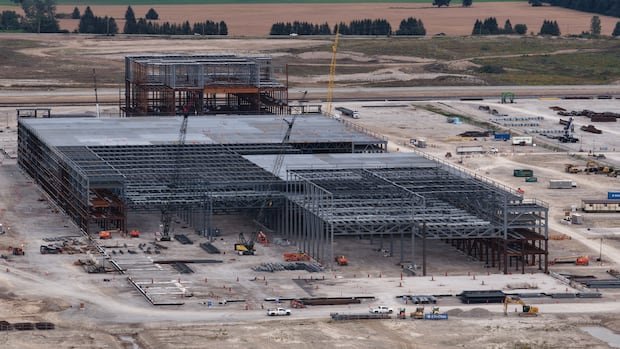
The latest setback involves Volkswagen’s PowerCo battery plant in St. Thomas, Ontario, with production now postponed until 2029 due to shifting market demand. This has raised concerns about whether Canada overestimated the speed of EV market growth. Critics suggest that the anticipated demand may not materialize to support the scale of battery production the governments aimed to attract.
Grieg Mordue, a former Toyota executive and retired McMaster University professor, points out two key issues with Canada’s EV investment strategy regarding scale and location. The St. Thomas plant was initially projected to produce enough battery cells for approximately one million EVs annually, which Mordue considers inefficient given Volkswagen’s primary assembly operations in the southern U.S. and Mexico.
Despite the challenges, Volkswagen maintains that the St. Thomas plant remains a crucial part of its North American battery strategy. The delay offers an opportunity to incorporate newer battery technology and adjust production according to evolving demand. This adjustment could lead to reduced taxpayer subsidies, with government support linked to the plant’s battery output.
While some critics question the current EV market demand, others view these challenges as part of a long-term investment strategy. Clean Energy Canada’s Joanna Kyriazis suggests that the industry is still transitioning, and such investments are vital for Canada to remain competitive in the global shift towards electric vehicles.
The broader justification for domestic battery production remains relevant, especially in light of the heavily concentrated battery cell production in Asia. Despite varying opinions on the current market dynamics, the future of Canada’s auto sector may rely on its ability to manufacture and sell competitively priced EVs and related components.