
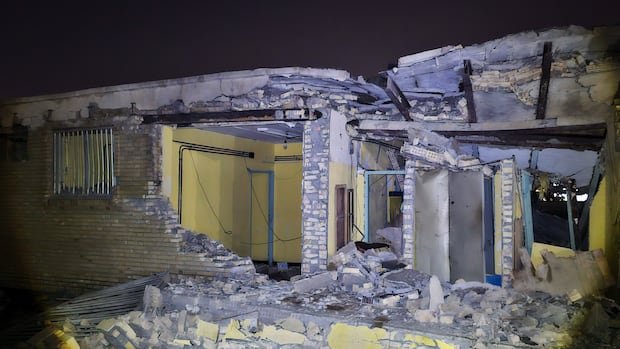

Iran and neighboring Arab countries found themselves in a renewed conflict on Wednesday following a significant escalation of tensions between Tehran and Washington, resulting in U.S. forces targeting Iran’s southern coast and Iran retaliating by attacking American bases across the region.
The United States issued threats of further severe strikes, while Iran alleged that a wedding party was hit during the attacks, leading to the death of 18 individuals and injuries to 108 others. This latest round of U.S. airstrikes caused Asian and European stock markets to decline, pushing oil prices to levels not seen since July and exacerbating the economic impact of disruptions in energy supplies.
The U.S. Central Command confirmed targeting Islamic Revolutionary Guard Corps air defenses, maritime assets, mine-laying capabilities, and communication sites, while Iranian media reported strikes on multiple locations near the strategically vital Strait of Hormuz, where Iran has previously threatened tankers.
Responding to the situation, U.S. President Donald Trump described the U.S. strikes as significant and warned of possible future actions, asserting that Iran’s response was minimal. Iran, in turn, launched attacks on what it claimed were U.S. assets in Bahrain, Jordan, Kuwait, and Iraq, expressing its objective to expel U.S. forces from their longstanding military bases in the Middle East.
In separate incidents, Iran reported carrying out missile and drone attacks on the U.S. Ali Al Salem Air Base in Kuwait, with Kuwait’s fire service confirming a drone strike on a residential complex. Other countries in the region, such as Qatar and Bahrain, also condemned the attacks and held Iran responsible for the repercussions, with Bahrain intercepting and destroying Iranian drones.
Moreover, Iran alleged that two tankers were hit by mines guided by U.S. personnel in the Strait of Hormuz, leading to the blacklisting of additional vessels by Iran. Despite the escalating tensions, President Trump reiterated that the strait remains open for shipping, proposing a name change to “TRUMP STRAIT.”
The conflicts have resulted in casualties and damages, with reports of civilian deaths, including those killed during a wedding ceremony in Sirik. The intensity of the recent exchange of fire is considered the most severe since July, showcasing the strained military capabilities of both the U.S. and Iran.
As the situation unfolds, both nations continue to assert their positions and strategies, with the U.S. exploring economic pressure tactics on Tehran and Iran aiming to emerge from the conflict with lifted sanctions and increased control over the vital Strait of Hormuz.