
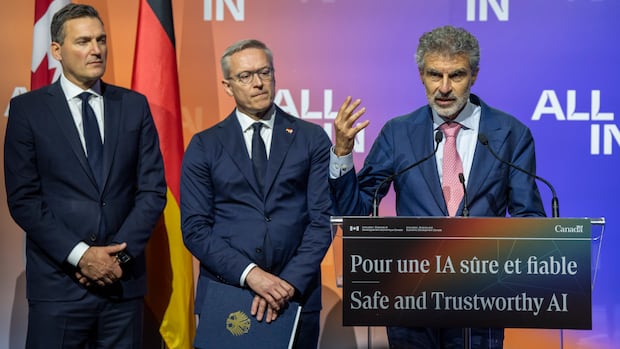

Without proper oversight, artificial intelligence poses a significant threat to humanity — a cautionary message that Yoshua Bengio, a leading figure in AI development, has consistently emphasized for years.
On Wednesday, alongside officials from the Canadian and German governments, Bengio announced a joint investment exceeding a quarter billion dollars aimed at addressing this looming danger.
Bengio is working on developing a novel AI model known as Scientist AI, engineered with safety as a core principle. This model is designed to prioritize objective truths and comprehend facts without having its own objectives, such as satisfying users. Additionally, it may serve as a safeguard for other AI systems.
The Canadian federal government is contributing $150 million to LawZero, a Montreal-based non-profit founded by Bengio last year, which focuses on creating models like Scientist AI. This marks the first instance of federal financial support for the organization, while Germany is contributing an extra 100 million euros.
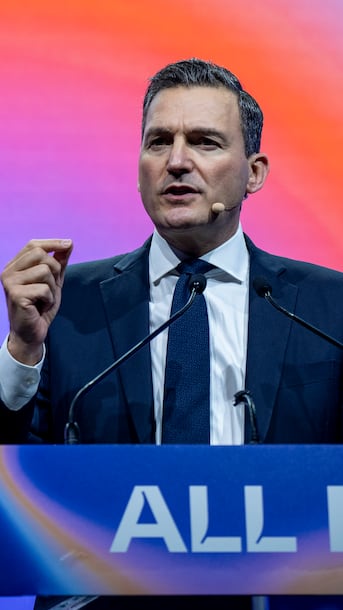
Canada and Germany will jointly invest up to $300 million Cdn into the non-profit LawZero, founded by Canadian computer scientist Yoshua Bengio, to foster the development of a new kind of safe AI, part of Canada’s initiative for a ‘sovereign AI capability,’ according to Minister of Artificial Intelligence Evan Solomon.
“I approach this with a profound sense of urgency because I want a future for my children and grandchildren,” Bengio expressed during the All In conference, a key event for AI experts held in Montreal this week.
Concerns regarding the potential dangers of AI have escalated, particularly after a departing researcher from Anthropic — a leading AI firm — cautioned that the technology might lead to humanity’s extinction within the next ten years.
During a recent interview with Bloomberg, Prime Minister Mark Carney also advocated for the establishment of a global, independent organization to oversee and address the risks associated with AI technologies.
-
Read more about LawZero: Can AI safeguard us against AI? One of its Canadian pioneers thinks so
-
Exclusive
Draft federal AI strategy aims to scale up adoption, offer literacy training by 2031
-
OpenAI flags 6 new examples of ‘concerning’ AI behaviour
Artificial Intelligence Minister Evan Solomon stated that the funding for LawZero is part of Canada’s broader commitment to fostering responsible AI development.
“Our actions today are not a reaction to recent headlines, but rather a reflection of our philosophical commitment to responsible and safe development,” he remarked.
Safer by design?
Experts warn that the challenges posed by AI are significant, suggesting that it will be extremely difficult to address issues like AI generating false information or acting without explicit human consent.
“Currently, there is no simple solution to these problems. We are dealing with immensely capable and potentially transformative AI systems,” noted Jaxson Khan, an AI policy expert at the University of Toronto’s Munk School of Global Affairs.
He added that powerful AI systems are being developed by both American and Chinese companies, a trend that is likely to persist.
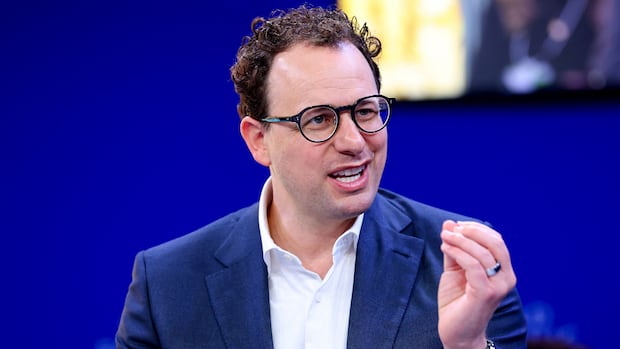
Anthropic CEO Dario Amodei warned that AI development needs to slow down for safety measures to catch up. U.S. President Donald Trump dismissed the risk of artificial intelligence when questioned by reporters.
“Canada is currently in a position where we might feel a lack of control regarding AI,” he stated.
Nevertheless, collaborating with Germany to support LawZero remains significant, according to Khan.
“It’s essential to create alternatives that are ideally safer from the outset,” he remarked.
“I am curious to see if this approach will succeed, but I believe it’s a valuable investment from the government and a fruitful partnership with Germany.”
Domestic capacity and partnerships
Experts emphasize that forming partnerships with nations that share similar goals and values is another critical aspect of addressing AI challenges.
This announcement followed shortly after two AI companies, Canada’s Cohere and Germany’s Aleph Alpha, finalized a merger agreement.
“This merger can be seen as a form of capacity building,” said Vass Bednar, managing director of the Canadian Shield Institute think tank.
-
AI ‘fearmongering’ could harm Canada’s rare opportunity, says top CEO
-
Analysis
One of the world’s biggest AI companies wants a deal with Canada. Is sovereignty the trade-off?
“We possess the ability to catch up and create alternatives. We just need to maintain that belief,” she stated.
“We cannot allow ourselves to succumb to the inevitability of technology or its potential harms.”
Taking a multifaceted approach may yield positive results, according to Khan.
Bengio asserts that surrendering is not an option.
“Achieving our goals will be challenging,” he acknowledged. “However, if we can influence the world, even if just a little, towards a better future for humanity, we must make the effort.”