
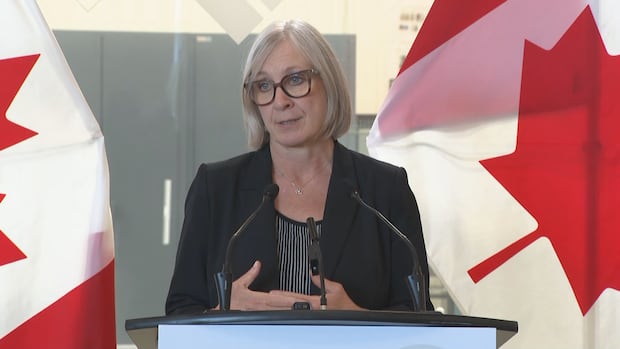

Canada is establishing a new coalition designed to tackle workforce shortages and equip workers for the evolving requirements of the nation’s advanced manufacturing industry.
On Monday, Jobs and Families Minister Patty Hajdu unveiled the Advanced Manufacturing Workforce Alliance in Guelph, Ontario, in collaboration with Next Generation Manufacturing Canada, the Excellence in Manufacturing Consortium, and the Canadian Skills Training and Employment Coalition.
This new coalition is being introduced as manufacturers face challenges related to labor shortages and an increasing disconnect between the skills that employers require and those that employees possess, according to Hajdu.
“Feedback from the industry indicates that job seekers are arriving without the necessary skills for the current methods of operation,” Hajdu remarked during the announcement, which took place at the Frank Hasenfratz Centre For Excellence In Manufacturing.
She emphasized that this skills gap is hindering companies’ growth potential and causing “lost time” and “lost opportunity.”
-
During visit to Windsor, Canada’s jobs and families minister announces actions to protect workers
-
Where do Canada-U.S. trade negotiations stand? Here’s a sector-by-sector breakdown
The Ministry of Jobs and Families stated that this coalition will unite manufacturers, labor unions, educational institutions, industry associations, Indigenous groups, and underrepresented communities in order to pinpoint workforce deficiencies and create effective training solutions.
This initiative arises as the manufacturing sector encounters challenges from tariffs, skill shortages, disruptions in the supply chain, and the increasing implementation of automation, robotics, and artificial intelligence, according to the ministry.
Hajdu remarked that this initiative is particularly vital as manufacturing becomes more interconnected with digital technologies, programming, and artificial intelligence.
“This represents the future of work,” she noted. “We have the opportunity to make this less daunting for workers and more profitable for businesses.”
Tariffs, supply chain disruptions
Dominique O’Rourke, the MP for Guelph, who also addressed the audience at the launch, mentioned that this initiative is part of the federal government’s larger strategy to foster a more resilient economy as tariffs, supply chain issues, and labor shortages transform Canadian industries.
“I witness firsthand how global tariffs, supply chain disruptions, labor shortages, and broader economic changes are altering industry operations and competitiveness,” O’Rourke stated.
She highlighted the advanced manufacturing sector in Guelph, pointing out that companies like Linamar support a wider network of suppliers, machine shops, tool-and-die manufacturers, and transport firms.
“In Guelph, advanced manufacturing is a catalyst for innovation, bolstering supply chains and providing thousands of high-quality jobs,” O’Rourke remarked.

Guelph MP Dominique O’Rourke speaks at the Frank Hasenfratz Centre For Excellence In Manufacturing in Guelph, Ont., on Monday, Aug. 17, 2026. (CBC)
For Jayson Myers, CEO of Next Generation Manufacturing Canada (NGen), the future of advanced manufacturing fundamentally revolves around people.
“While advanced manufacturing includes artificial intelligence, robotics, cutting-edge technology, engineering, and resilient supply chains,” Myers explained, “the core of it all is about people.”
With economic uncertainties and emerging opportunities both domestically and internationally, Myers indicated that Canada must harness the skills, talents, and entrepreneurial spirit of its workforce.
“This is essential for the future economic health of the Canadian economy,” he stated.
Myers added that the coalition will strive to ensure that training and educational programs adapt to the evolving needs of the sector while attracting youth and underrepresented communities to sustainable careers in advanced manufacturing.
“Our workforce alliance is oriented towards action and results,” he specified, noting that achieving these objectives will necessitate collaboration among manufacturers, educators, governmental entities, and various stakeholders across Canada.
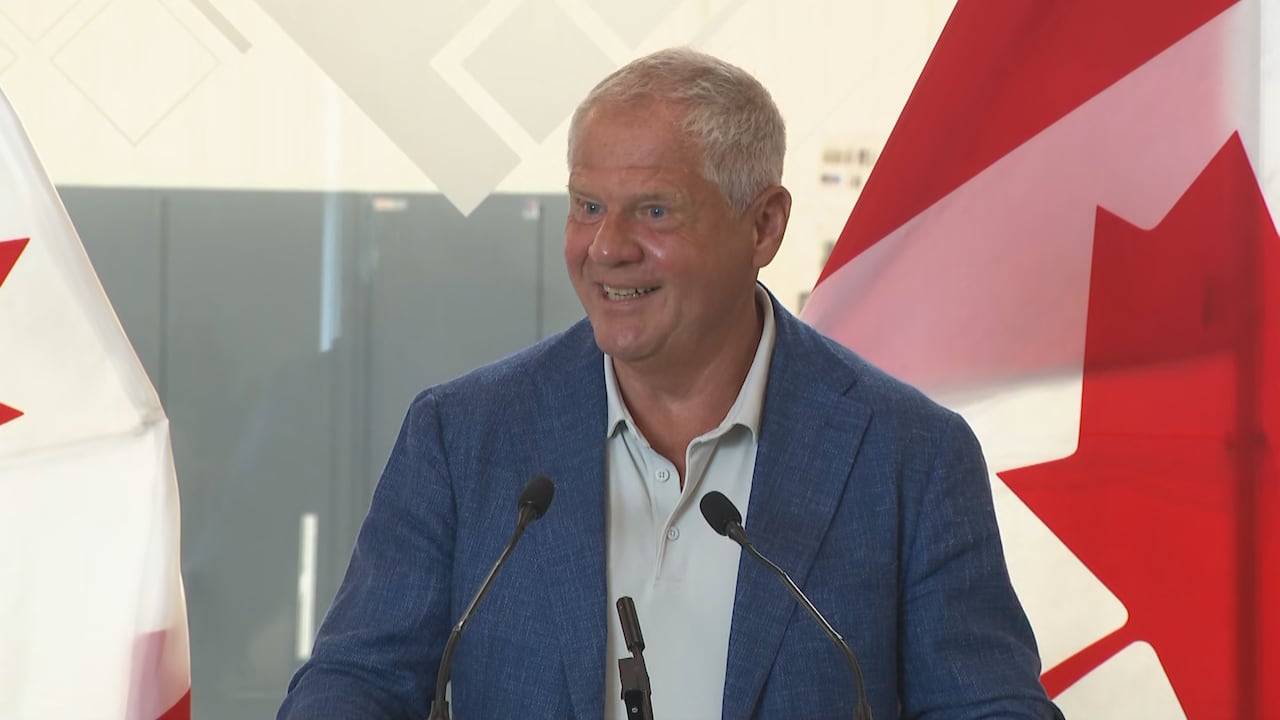
Jayson Myers, CEO of Next Generation Manufacturing Canada, emphasizes that the future of advanced manufacturing ultimately depends on people. (CBC)
The ministry highlighted that manufacturing plays a crucial role in Canada’s economy, supporting sectors such as automotive, steel, aerospace, and clean technology.
The Advanced Manufacturing Workforce Alliance marks the second of six planned sector-specific Workforce Alliances. The first, which focuses on mining and minerals, was established on June 4, according to the ministry.
The federal government asserts that these alliances will tackle labor market issues and synchronize public and private investments in skill development.
Hajdu also underscored the significance of skilled trades, announcing that the federal government has allocated $6 billion to assist skilled trades workers, which includes initiatives aimed at providing paid work experience, apprenticeships, and employer support.