
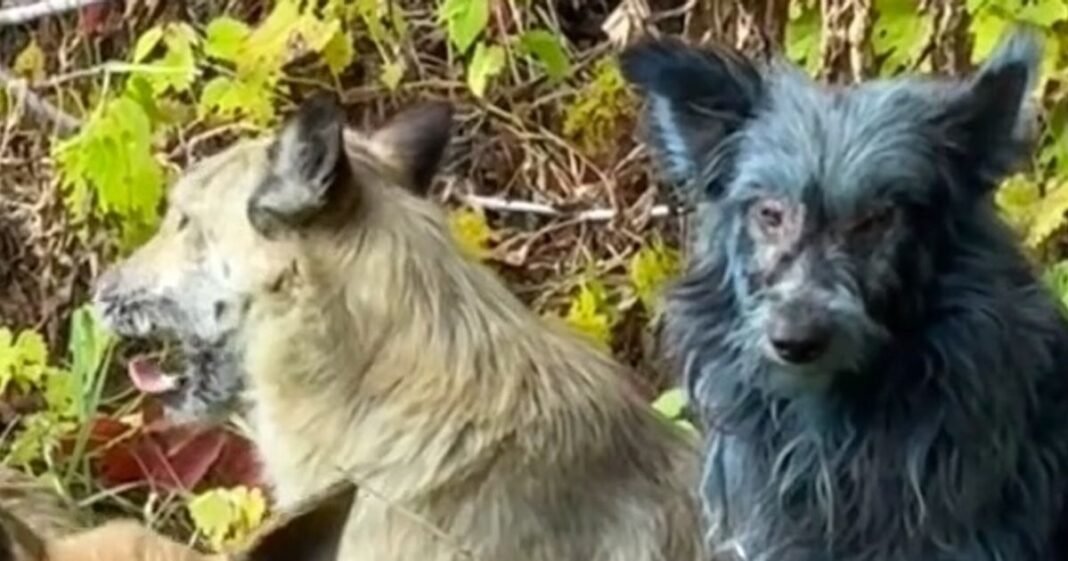

In a puzzling discovery, photos have surfaced showing dogs with vivid blue fur near the Chernobyl nuclear power plant. These dogs, believed to be descendants of abandoned pets in northern Ukraine following the tragic incident nearly four decades ago, were spotted roaming the exclusion zone by the Dogs of Chernobyl charity.
Despite their striking color, the charity, established in 2017 to care for the strays within the 18-square-mile exclusion zone, reported that the dogs seemed to be in good health. The area remains restricted to most people since the catastrophic explosion of Reactor No 4 in 1986, which resulted in one of the worst nuclear disasters in history, claiming 31 lives and impacting thousands more.
The images of the blue dogs have sparked interest in the surviving wildlife of Chernobyl, where animals have thrived in the absence of human presence. Approximately 700 dogs now call the area home, with the charity providing essential medical treatment and food. The three blue-furred hounds were discovered during routine checks conducted by the organization.
In a social media post, the charity expressed their astonishment, stating, “A very unique experience we have to discuss. Chernobyl blue dogs. We are on the ground catching dogs for sterilization and we came across three dogs that were completely blue. We are unsure of the cause and are working to capture them to investigate further. It is likely that they have been exposed to some form of chemical. Despite being active, we have not yet been able to capture them.”
Chernobyl has unexpectedly become a refuge for wildlife in the decades since the catastrophic nuclear accident. The absence of humans has led to the resurgence of wild animals in the area, with wild horses, deer, and over 200 bird species now thriving in the Chernobyl Exclusion Zone, a 1,600 square mile area encompassing the site on the Ukraine-Belarus border.
Scientists studying the impact of radiation on animals presented their findings at a 2022 conference, revealing a flourishing biodiversity in the region. They confirmed the lack of significant adverse effects from current radiation levels on the animal and plant populations within the exclusion zone, noting stable and sustainable populations across various species.
Following the evacuation of over 100,000 people and the establishment of the Chernobyl Exclusion Zone within a 20-mile radius of the damaged reactor, visitors were only permitted back into the area in 2011. Strict regulations govern tourist access to the site due to the persisting high levels of radiation, with non-compliance subject to severe penalties, including fines and potential imprisonment.