
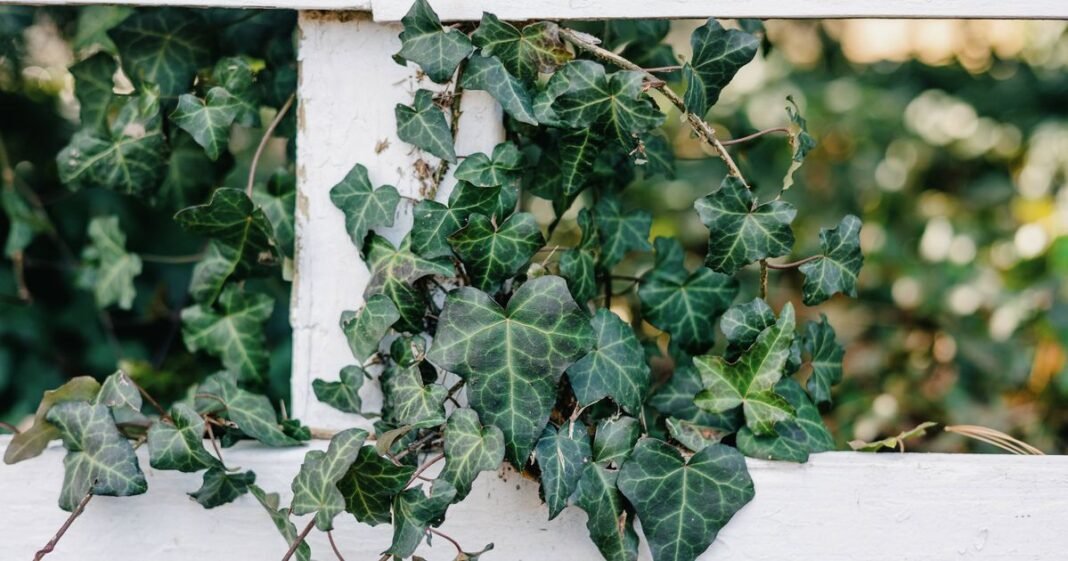

Gardeners throughout the United Kingdom are well acquainted with the robust nature of English ivy, even if they did not intentionally plant it. This evergreen climber is widespread in the country, known for its ability to cling to walls, fences, and trees, creating dense leaf coverings.
While English ivy offers some ecological benefits, such as providing shelter for birds and aiding in pollination, its tendency to overpower other plants, harm aged walls, and block sunlight can be a nuisance for gardening enthusiasts. Dealing with fast-growing weeds like ivy may lead one to believe that powerful chemicals are the solution.
However, experts at Drip Works have put forth a homemade solution using three common kitchen ingredients to effectively eradicate “serious and invasive” ivy, as reported by Nottinghamshire Live.
The method for managing unwanted ivy varies depending on its location in the garden. For ivy-covered walls, Drip Works specialists recommend a vinegar-based spray.
“If you desire a wall free of ivy in your garden, this natural method is highly effective,” suggest the experts at Drip Works. They endorse a mixture of apple cider vinegar, salt, and washing-up liquid, which they claim has been proven as the optimal solution for eliminating ivy.
Creating this ivy-killing spray is simple; just combine the three readily available ingredients in a spray bottle. Mix one gallon of apple cider vinegar, one tablespoon of salt, and about two tablespoons (or one ounce) of washing-up liquid.
You can use either apple cider vinegar or white vinegar to combat ivy, with apple cider vinegar potentially being more potent for some due to its additional compounds beyond acetic acid. The efficacy of either vinegar in eradicating ivy depends on the concentration of acetic acid, which varies among vinegar types.
If you do not have apple cider vinegar at home, it is easily obtainable from your local supermarket. Sainsbury’s offers 500 ml of Apple Cider Vinegar for just £2.10.
Prior to applying the mixture, ensure the lid is secure and give it a good shake. It is essential to wear gardening gloves, long sleeves, and boots for protection during the process.
Irrigation experts recommend allowing the vinegar solution to cover the ivy plants for at least five days before assessing its effectiveness. This liquid blend acts as a natural herbicide, dehydrating the ivy leaves and aiding in breaking down their protective waxy coating.
The team from Drip Works advises: “After five to six days, use garden shears and a pruning saw to eliminate dead ivy firmly clinging to the structure.”
If some leaves show resistance to the herbicide, you may need to repeat the process until the English ivy is completely eradicated.
Once the leaves have withered, it is crucial to physically remove the roots, as ivy is persistent and can regenerate from even a small root fragment.
While ivy can provide nesting sites for wildlife within its dense foliage, uncontrolled spread can endanger trees by adding weight and competing for light and moisture.