
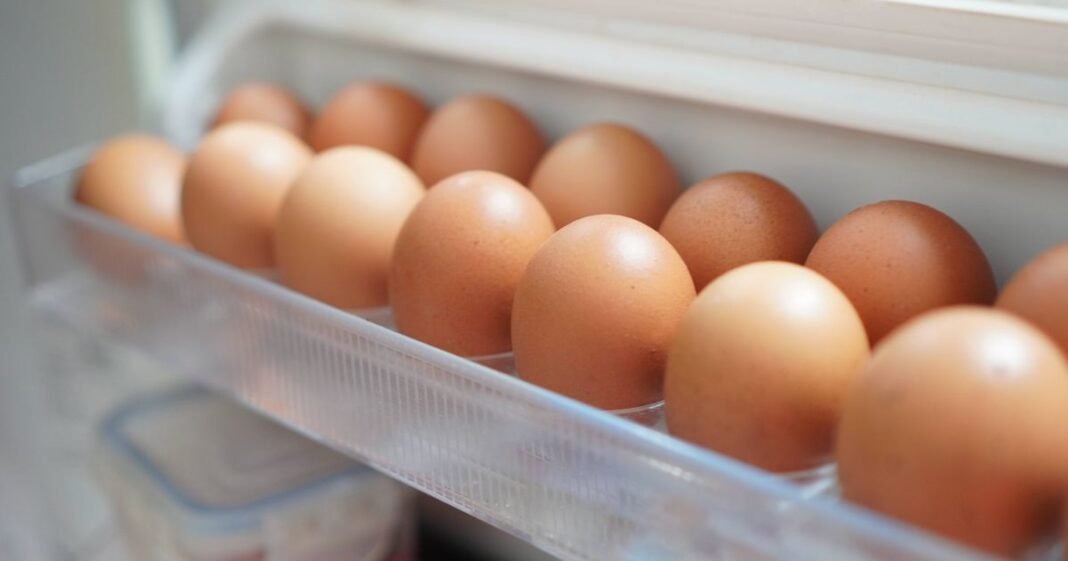

Storing different types of food often leads to debates, such as whether bread should be kept in the fridge or if tomatoes are best left on the counter. Eggs also spark controversy, with opinions divided on whether they should be stored in a cupboard or in the refrigerator.
In the UK, eggs with the British Lion stamp are considered safe to consume, even when runny or raw, as they come from hens vaccinated against salmonella. While these eggs can be stored at room temperature, experts offer varying advice on the matter.
Bex Tonks, the founder of St. Ewe Free Range Eggs, highlighted the importance of maintaining a consistent ambient room temperature for eggs to prevent temperature fluctuations that may affect their quality. Placing the eggs pointed end down is recommended to allow the air sac to expand and preserve the egg’s interior.
Contrary to room temperature storage, some specialists suggest refrigerating eggs for a steady temperature environment. Henry O’Connor, an egg expert and the creator of Better Eggs, emphasized the benefits of storing eggs in the fridge to maintain freshness and taste. Keeping eggs in their original box on a middle shelf, with the pointed end facing downwards, is advised for optimal shelf life.
Eggs stored at around 4°C in the fridge can remain safe to eat for three to five weeks after purchase. If longer preservation is needed, eggs can be cracked and frozen, with a pinch of salt or sugar added to the yolks for texture maintenance.
Jason Webb, managing director of ETI, recommended storing eggs in the fridge at 4°C for freshness and safety. Proper egg storage includes keeping them away from temperature fluctuations within the refrigerator door trays and ensuring the pointed end is facing downwards to prevent yolk contact with the shell.
Sarah Heaps, a fridge freezer specialist at AO.com, sided with storing eggs in the fridge for better preservation and shelf life. Placing eggs in the refrigerator, ideally at or below 4°C, helps maintain their freshness. Keeping eggs in their original packaging and away from odors is also recommended.
For optimal egg quality, allowing them to reach room temperature before use can enhance their taste and texture. It is suggested to take chilled eggs out of the fridge 20 to 30 minutes before cooking to prevent issues like curdling or improper rising during baking.