
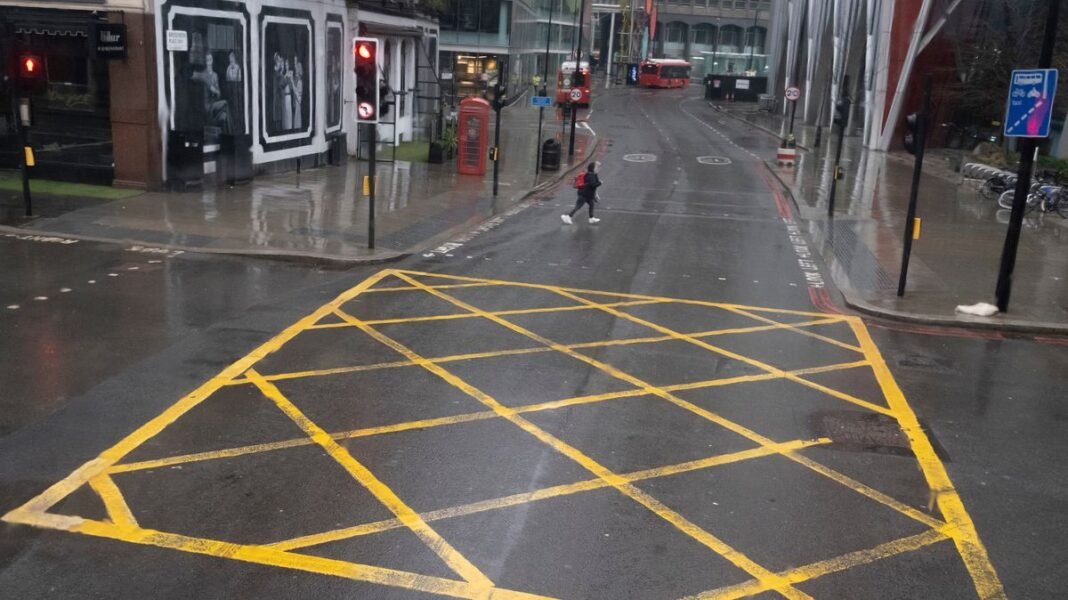

The most lucrative yellow box junction in the UK has been disclosed, raking in an impressive £450,000 in the initial eight months of 2025. This junction, located in Kingston upon Thames, London, saw an average of 27 penalty notices issued daily. Roland Head, 75, the owner of The Real Butchers shop nearby, expressed his views stating, “It’s not just about traffic control, it’s a profitable venture. The local authorities are unlikely to make any changes as it is a source of revenue for them.”
Head mentioned that he often observes frustrated drivers getting stuck in the yellow grid from his shop window during quiet moments. On one particular morning between 8.35am and 9am, he witnessed five drivers caught in the junction.
In the same year’s first eight months, the council imposed 6,568 penalty charge notices at this junction on Kingston Road, resulting in around 27 penalties daily, totaling £451,405 as per a Freedom of Information Act query.
The Highway Code specifies that drivers should not enter a yellow box unless they can clear it without stopping to enhance traffic flow. However, some argue that fines may be unjust as drivers might be forced to halt due to the actions of others.
Although these yellow boxes were installed in 2015, fines were only introduced in July 2020. The junction’s proximity to an ambulance depot at New Malden causes ambulances to get stuck behind vehicles hesitant to enter the yellow box to avoid fines.
A local resident, Peter Ryan, 51, expressed his frustration, stating that he feels irritated as soon as he enters that road due to the congestion caused by drivers trying to evade fines.
Since April, the penalty for a yellow box violation is £160 in London boroughs, reduced to £80 if paid within two weeks, while outside London, the fine is £70, reduced to £35.
The Kingston borough clarified that income from Penalty Charge Notices (PCNs) is allocated for essential traffic and parking management, with additional funds utilized for priority transport-related projects like providing Freedom Passes for elderly residents.
A council spokesperson emphasized that the purpose of the two yellow boxes is to prevent traffic blockages, facilitate side road entries and exits, ensure visibility of pedestrians and cyclists for right-turning motorists, and enhance safety for all road users.
The council refuted claims that the junction generates the highest revenue in the UK, arguing that it comprises two boxes rather than one.