
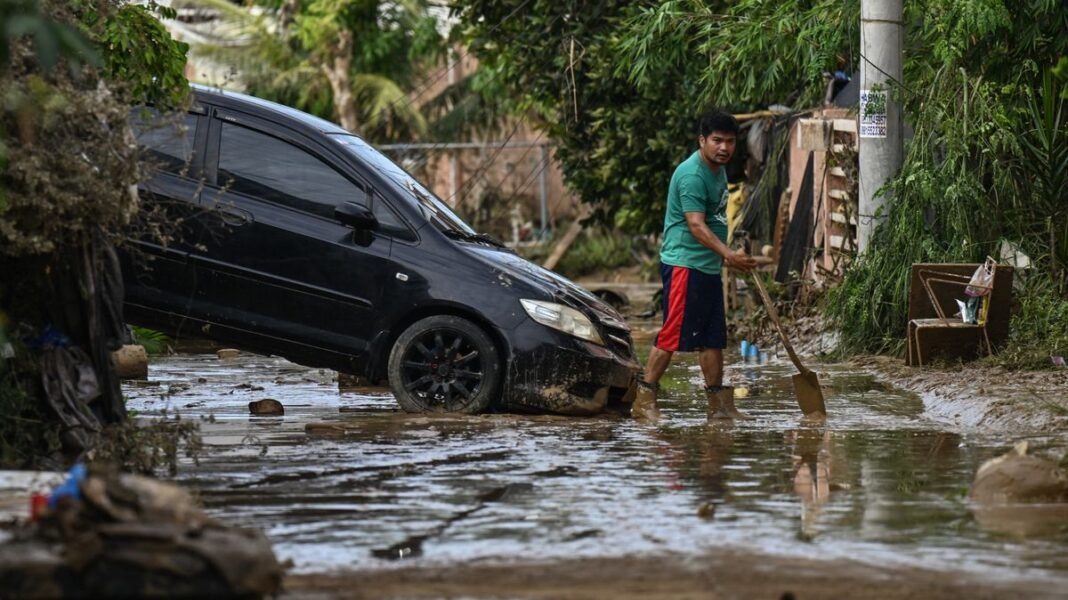

Vietnam and the Philippines are currently facing the aftermath of Typhoon Kalmaegi, which has resulted in the tragic loss of over 241 lives.
The typhoon first caused flash floods in the Philippines, leading to the destruction of homes and businesses, before moving on to Vietnam where it brought winds reaching speeds of up to 92mph along the coastline.
Authorities in Vietnam have closed six airports, impacting hundreds of flights. The country is preparing for strong winds, flooding, and landslides, with over 260,000 soldiers ready for rescue operations.
In the Philippines, memorial services are being held for the landslide victims, with over 560,000 people displaced from their homes.
Vietnam’s national weather forecaster has identified several cities and provinces at risk of flooding and landslides, with reports of damage already emerging from various areas.
Malaysian Prime Minister Anwar Ibrahim has expressed his deepest condolences for the devastation caused by Typhoon Kalmaegi, offering support to the affected families.
Images from Vietnam’s coastal towns depict significant damage to businesses, with workers seen clearing debris at affected sites.
Rescue efforts in both countries are ongoing, with thousands evacuated and emergency services on high alert. The storm’s impact is expected to continue, with forecasts indicating heavy rainfall in the coming days.
The Philippines has declared a state of calamity to facilitate emergency response efforts, with authorities warning of potential further tropical cyclones affecting the region.
Typhoon Kalmaegi is the 20th to hit the Philippines this year, adding to the series of natural disasters that have struck the country recently. The devastating effects of the typhoon have left communities reeling and in need of urgent assistance.
Residents are urged to remain vigilant as the storm progresses, with Vietnam bracing for the imminent landfall of Kalmaegi and its potentially destructive impact on the region’s coastal areas.
The repercussions of the typhoon are far-reaching, impacting infrastructure, livelihoods, and the overall safety of the affected populations. Both Vietnam and the Philippines are working tirelessly to mitigate the storm’s effects and provide relief to those affected.