
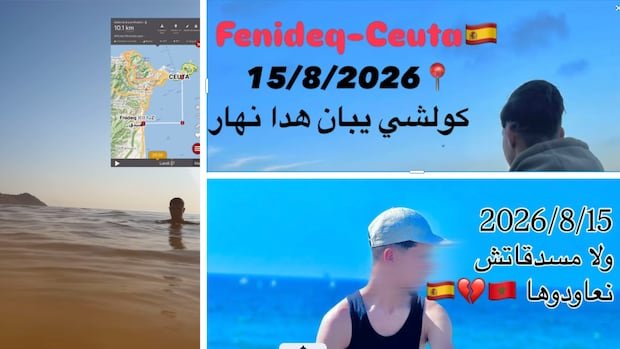

In the days leading up to the recent major influx of migrants into Europe, a brief video shared on Instagram received 1.4 million views. The video depicted a young man partially submerged in water, with a map illustrating a sea route from Fnideq, Morocco, to Ceuta, a Spanish enclave. The post’s caption, “we’ve arrived,” sparked further engagement.
Various viral posts on social media platforms like Instagram and TikTok played a role in mobilizing two waves of irregular migration from Morocco to Ceuta, with the most recent attempt on August 15 resulting in numerous arrests. These online communities focused on migration-related content, including music, memes, and imagery, seemingly exploiting the aspirations of African and Middle Eastern youth seeking better opportunities abroad.
While there is debate among authorities and organizations about the orchestrator of the events in Ceuta, it is evident that misinformation, propagated by multiple online channels, fueled the surge of migrants this summer.
CBC’s visual investigations team, in collaboration with Bellingcat, identified several active social media accounts, mainly on Instagram, before the initial wave on July 30. The dissemination of misinformation, suggesting a change in Spanish migration policies, led to a surge in posts promoting the idea of a feasible crossing into Ceuta, resulting in over 72,000 border crossings and a subsequent political crisis.
Despite most individuals returning to Morocco post-July 30, approximately 5,000 individuals remain in Ceuta, with tragic casualties during the attempted crossings. The proliferation of misleading information across online platforms, targeting vulnerable populations seeking answers, highlights the tangible repercussions of online manipulation.
Accounts on social media directed followers to WhatsApp groups for planning crossings and provided guidance through various posts. The engagement with these platforms intensified ahead of the August 15 attempt, signaling a continuation of the trend despite efforts by Meta and TikTok to fact-check content related to the border crossings.
The surge in migration-related content can be attributed to the success of previous migrations to Ceuta, compounded by limited opportunities and political constraints in the migrants’ home countries. The online messaging resonated with disillusioned youth, fueling a sense of urgency to migrate.
The influx of migrants underscores the complex interplay between social media narratives and real-world actions, particularly in regions where economic challenges and political instability drive individuals to seek better prospects elsewhere. The accounts promoting migration to Ceuta and other European destinations continue to attract followers, perpetuating a cycle of hope and desperation among vulnerable populations.
Despite efforts to address the spread of misinformation and regulate such content, the allure of migration to Europe persists as a symbol of opportunity and escape for many individuals facing adversity in their home countries.