
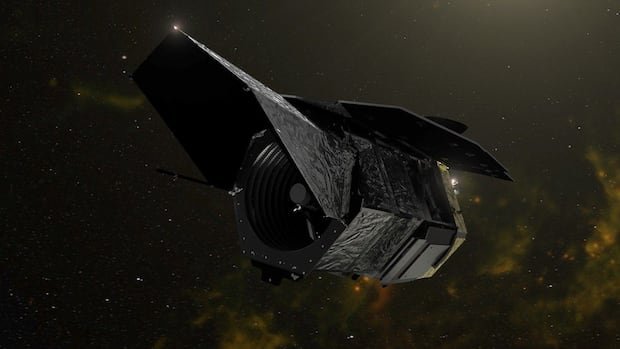

At 7:26 a.m. on Sunday morning, a new space telescope is scheduled to launch from Cape Canaveral, Florida atop a Falcon Heavy rocket. The Nancy Grace Roman Space Telescope, named after NASA’s first chief astronomer, is poised to offer fresh insights into the universe. Positioned at L2, 1.5 million kilometers away, the telescope will undertake a five-year mission with potential for extension.
Unlike existing telescopes such as the Hubble Space Telescope or the James Webb Space Telescope, the Nancy Grace Roman Space Telescope boasts unique instruments. With a 2.4-meter mirror akin to the Hubble, it also features a coronagraph to block starlight and reveal planets orbiting distant stars. Additionally, its Wide Field Instrument, as sensitive as the Hubble’s, can image areas 100 times larger, revolutionizing observations from a pinhole to a golf ball perspective.
The telescope’s advanced camera is designed to capture billions of stars, facilitating various sky and stellar surveys. Expected discoveries from the Nancy Grace Roman telescope include the pursuit of exoplanets to unravel the uniqueness of our solar system and the broader universe.
Through methods like the transit method and microlensing, the telescope will significantly expand the hunt for exoplanets, potentially identifying Earth-like planets. Furthermore, the telescope’s mission involves exploring dark matter and dark energy, invisible components that dominate the universe. By analyzing galaxies and globular clusters, it aims to map out the distribution of dark matter and understand the acceleration of the universe propelled by dark energy.
Astronomers anticipate groundbreaking findings from the Nancy Grace Roman Space Telescope, offering a deeper understanding of the cosmos and potentially unveiling new secrets of the universe.