
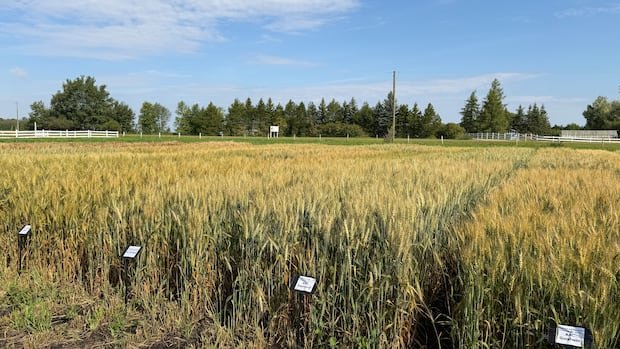

In northeastern Alberta, researchers are addressing copper deficiencies in cattle by applying the mineral to wheat crops in a field. This deficiency can impact the fertility and health of the animals. Additionally, the researchers are experimenting with various cover crops to determine which ones effectively suppress weeds, potentially reducing the need for herbicides.
Jay Cory, a farmer and chair of the Lakeland Agricultural Research Association (LARA), highlighted the value of research in sparking new ideas and considerations for farmers. LARA, a non-profit organization serving northeastern Alberta, conducts its studies at the Fort Kent research field, situated about 250 kilometers northeast of Edmonton.
Recently, local producers were given the opportunity to tour the facility and explore the ongoing trials, which focus on enhancing productivity and sustainability through research on crop varieties and agricultural practices.
Maria Angelica Ouellette, a research scientist at LARA, emphasized the importance of testing ideas in real-world conditions, including factors like precipitation and temperature changes. The organization’s research is guided by questions and input from local farmers to ensure relevance and practicality.
This year, the research is further challenged by unusually wet weather conditions, affecting crop performance. The program at LARA is driven by producers, with a focus on sustainable crop management and maximizing land productivity.
Alyssa Krawchuk, LARA’s executive director, stressed the significance of local research tailored to the specific climate and conditions of the region. By conducting unbiased studies and sharing results through events like field tours, LARA aims to minimize risks for farmers and provide valuable insights.
Jay Cory highlighted the importance of evaluating the cost-effectiveness of solutions, as increased costs may not always translate to improved yields. The organization remains dedicated to finding practical solutions that benefit farmers, while also reducing risks associated with adopting new products or techniques.