
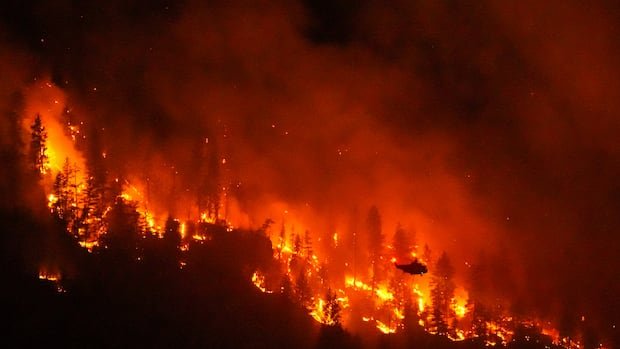

A recent study has shed light on how global warming exacerbates wildfires and the thawing of permafrost, leading to increased greenhouse gas emissions that accelerate climate change beyond current estimates. These climate feedback loops could potentially contribute 20 to 30 percent more warming than initially projected for this century, according to researchers from institutions in the United States.
The study, published in the journal Environmental Research Letters, highlights the impact of warming-induced emissions on global temperature rise. It underscores the significance of including these feedback mechanisms in climate models to align policy targets with the Earth’s response to climate change.
Canada, with its substantial share of warming-induced emissions, plays a crucial role in these global climate dynamics. The country is already experiencing accelerated warming, as outlined in the recent report “Canada’s Changing Climate,” which predicts a five-degree temperature increase by the end of the century.
The study emphasizes that Canada’s environmental changes will not only affect the local landscape but also contribute to global climate change. Previous research has shown the repercussions of extreme events like the unprecedented wildfires in 2023, which released a billion tonnes of carbon into the atmosphere, making them one of the top emitters worldwide.
The thawing of permafrost in the Arctic is primarily driven by rising temperatures, leading to both gradual and abrupt thawing processes. The latter, influenced by extreme weather events such as wildfires and heavy rainfall, can release sizable amounts of carbon into the atmosphere. These abrupt thaws expose organic material to microbes, resulting in the production of methane and carbon dioxide.
Additionally, freshwater wetlands, prevalent in Canada, are significant sources of warming-induced emissions, particularly methane. The surge in methane levels in the atmosphere since 2020 has raised concerns about the role of wetlands in this process. Researchers stress the importance of integrating wetlands into climate models to better understand and address these emissions.
As the study underscores the intricate relationship between climate feedback loops, wildfires, permafrost thaw, and wetland emissions, it calls for increased research and monitoring efforts, especially in Canada, to mitigate the impact of these processes on global climate change.