
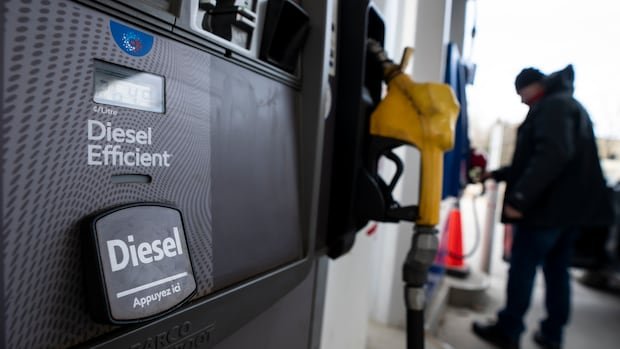

Diesel prices in Canada are soaring as a result of ongoing global conflicts, significantly impacting the cost of fuel for trucks transporting essential goods nationwide. The Canadian Truck Operators Association’s Tej Dulat expressed concern over the substantial increase in diesel prices, emphasizing that this surge is straining trucking companies’ budgets. With commercial trucks consuming large quantities of fuel weekly, the spike in prices since Russia’s invasion of Ukraine in 2022 has tightened profit margins for the industry.
As of the latest data, diesel prices in Canada have risen to $2.62 per litre, exceeding last year’s rates by over a dollar. In some areas like Vancouver, prices have reached $2.92 per litre. The situation is even direr in the U.S., where diesel prices have hit a record high of over $6 per gallon. Experts highlight that while attention has been on the impact of tariffs on Canadian goods, the surge in oil prices due to geopolitical tensions is currently exerting a greater influence.
The scarcity of diesel is a critical issue, with net exports from the Persian Gulf plummeting to a fraction of pre-war levels. Russia’s ban on diesel exports and the temporary closure of Canada’s largest refinery further exacerbate the shortage. To alleviate some of the burden, the federal government has extended the suspension of the fuel excise tax. However, industry experts warn that this measure may not be sufficient to offset the rising costs.
Concerns are mounting about the potential economic repercussions of the ongoing conflicts, particularly the U.S.-Israel war with Iran, which is a key factor in maintaining high gas prices. Analysts predict that persistent inflation could result from prolonged elevated energy prices. As winter approaches, energy analyst Dan McTeague warns of even higher diesel prices, indicating a challenging season ahead for the transportation industry and consumers.
Evan Fraser from the University of Guelph’s Arrell Food Institute emphasizes the widespread impact of diesel price hikes on the food supply chain, affecting shipping, storage, and production. The confluence of various factors, including extreme weather events affecting harvests, is creating significant upward pressure on food prices. Fraser cautions that this situation may lead to a prolonged period of elevated food prices, particularly impacting low-income households.