
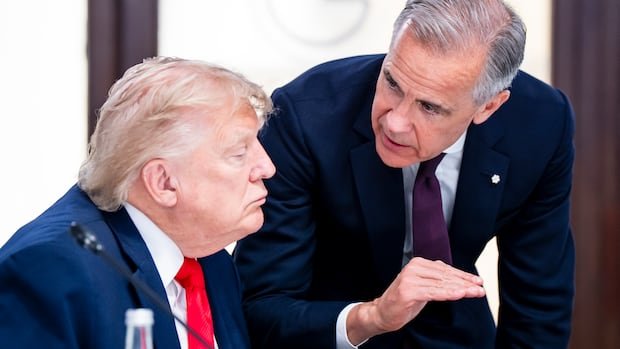

U.S. Trade Representative Jamieson Greer may avoid labeling it a trade “war,” but regardless of the semantics — a disagreement? a discord? a contention? — the ongoing dispute has surpassed 19 months.
Back in February 2025, Donald Trump, despite having previously endorsed a free trade agreement in 2018, initially imposed tariffs on various Canadian goods.
As it stands, it appears that it could be several additional months before any de-escalation of tensions, let alone a resolution, materializes.
According to Wolfgang Alschner, a business and trade law professor at the University of Ottawa, the current stalemate is likely to persist until the year’s end. Recent discussions have hinted at a potential compromise, but the gap between the parties’ stances remains too wide for an easy agreement. The status quo is uncomfortable but not dire enough to push either side into altering their position forcibly.
During a media briefing, Mark Carney characterized the most recent round of U.S. tariffs, announced earlier in the week, as “relatively modest” compared to other actions undertaken by the U.S. administration. This assessment might indicate a reluctance to retaliate with further measures against American imports, suggesting a possible equilibrium in the recent escalation cycle.
Carney also expressed Canada’s openness to striking a fair deal. However, both sides seem entrenched in their positions, with the primary negotiators—Greer for the U.S. and Dominic LeBlanc and Janice Charette representing Canada—maintaining a professional demeanor, keeping the door ajar for potential negotiations, as noted by Meredith Lilly, an international economic policy professor at Carleton University and a former trade adviser.
Lilly highlighted several upcoming events that could reignite talks, such as a potential resolution between the United States and Mexico, the U.S. midterm election outcomes altering the American political landscape, and the looming threat of new auto and truck tariffs by January 1, 2027.
There is also the possibility of Trump introducing fresh tariff threats, akin to his actions in the past summer. Conversely, Manitoba Premier Wab Kinew’s statements imply that provinces are preparing for an extended period of turmoil, perhaps exceeding two years.
In assessing the current situation, American officials may believe that the U.S.’s economic might provides an upper hand. Nevertheless, American economist Paul Krugman and Canadian foreign policy expert Roland Paris argue that Canada might possess the motivational and political advantage, given the unified Canadian stance against a perceived existential threat.
Public sentiment polls indicate strong Canadian support for taking a tough stance against the U.S., potentially bolstering Carney’s position at the negotiation table. However, this support could also complicate reaching a deal with the U.S.
Before negotiations halted, Charette cautioned American counterparts about the repercussions of breakdown and potential tariff impositions, emphasizing the limited negotiating room for the Canadian side. Additionally, public sentiment, as highlighted by David Coletto, could pose a significant roadblock to a new agreement.
Looking ahead, the outcome of ongoing trade talks and subsequent actions may shape the future trajectory of Canada’s relationship with the U.S., with the onus falling on the prime minister to navigate these challenges.
As the situation unfolds, it remains uncertain whether the current events will have a lasting impact on the Canadian populace’s perception of the U.S., suggesting potential long-term implications irrespective of a potential resolution in the near future.