
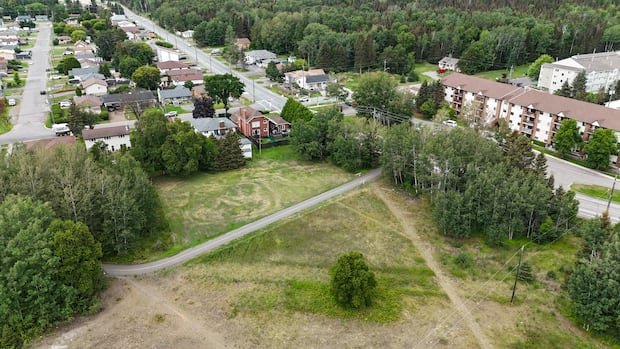

Lori Santink expressed disappointment but not surprise regarding the city council’s decision to rezone two empty lots for new housing projects in Thunder Bay, Ontario. One of the properties, 791 Arundel St., was sold to Terralux General Contractors and Development Limited earlier this year as part of the city’s surplus land sales. Thunder Bay is facing a shortage of approximately 1,000 housing units to meet the current demand.
The council’s approval paves the way for the development of more than 900 new housing units across the city. This includes 360 units in two apartment buildings at 791 Arundel St. (reduced from an initial proposal of 400 units), 150 units in a building at 144 Fanshaw St., and 400 units in two buildings at 300 Tokio St.
Despite the need for rezoning for the Arundel and Fanshaw properties, the Tokio Street location was already appropriately zoned. Lori Santink, a vocal opponent of the development, highlighted concerns about the projects conflicting with the city’s Net-Zero Strategy and Climate Adaptation Strategy.
Santink, a key member of the grassroots group TBay Greenspace Preservation, led efforts to gather over 2,600 signatures in a petition against the developments. The group, with over 500 followers, organized a rally outside city hall that attracted more than 100 participants.
Concerns raised by the group include the loss of green spaces, impacts on aging sewer infrastructure, increased traffic without adequate public transportation access in winter, and potential risks to local wildlife species. The implementation of Bill 60 limits residents’ ability to appeal council decisions through the Ontario Land Tribunal, further complicating opposition efforts.
Devon McCloskey, Thunder Bay’s planning services manager, stated that the developer must submit applications for site plan control and building permits before construction can commence. The city anticipates receiving applications for the Fanshaw and Tokio properties this year, with the Arundel site to follow.
Councillor Andrew Foulds, representing the area where 791 Arundel St. is situated, opposed the rezoning but acknowledged the unprecedented level of public engagement on this issue. Leia Minaker, an associate professor at the University of Waterloo, emphasized the challenges of achieving consensus on housing developments amid differing community viewpoints.
Minaker highlighted common concerns such as traffic, parking, privacy, and changes to neighborhood character in housing proposals. She stressed the importance of transparent planning processes to address concerns and visualize the potential impacts on the community.
In conclusion, as Thunder Bay grapples with the need for housing growth, stakeholders like Santink and community groups are closely monitoring the developments and advocating for transparent communication throughout the process to ensure public awareness and engagement.