
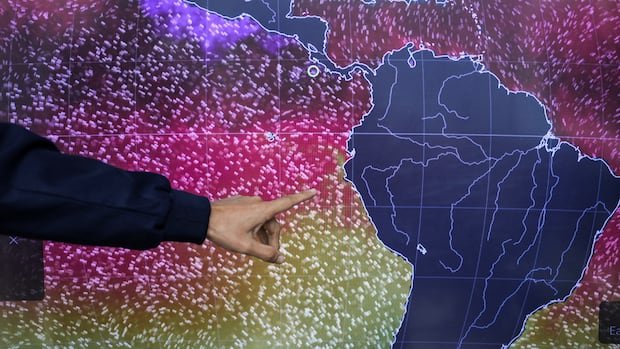

El Niño, a cyclical climate phenomenon known for disrupting global temperatures, is projected to reach its peak in the coming months and persist until next spring, according to experts. Presently, the effects of El Niño are already evident, impacting both weather patterns and human readiness.
One visible consequence is the declining water levels in the Panama Canal due to reduced rainfall associated with El Niño, affecting navigation and transportation. The Panama Canal Authority is closely monitoring the situation and plans to limit daily transits as the region braces for an extended El Niño season.
In another manifestation of El Niño’s impact, seabirds, particularly blue-footed boobies, are congregating in unusual numbers near the Panama Canal, signaling disruptions in marine ecosystems caused by the warming of the eastern Pacific Ocean.
Governments across Latin America are taking proactive measures in response to the strengthening El Niño, mobilizing firefighting resources, activating emergency plans, and fortifying essential services such as water, energy, and transportation systems. In Honduras, authorities have declared alerts in multiple municipalities due to adverse climate conditions affecting agriculture and livestock.
Meanwhile, in Indonesia, salt farmers are benefiting from a drought influenced by El Niño, while crop farmers are bracing for prolonged heatwaves. The Indonesian Meteorology, Climatology, and Geophysics Agency has warned of an intensified dry season, exacerbating water scarcity issues in various regions.
As El Niño continues to intensify, United Nations officials caution that it will exacerbate extreme weather events globally, compounding existing climate challenges. In Indonesia, the heightened heat and dryness from El Niño have contributed to an intense wildfire season, prompting efforts to combat forest fires and protect affected areas.
Looking ahead, models suggest that Canada can anticipate a warmer winter attributed to El Niño, with regions like British Columbia potentially experiencing reduced precipitation and snowfall. El Niño is also expected to lead to fewer tropical storms in the Atlantic Ocean.
The gradual development of El Niño offers governments sufficient time to prepare for its severe impacts, emphasizing the importance of proactive measures and readiness in mitigating the effects of this climatic phenomenon.