
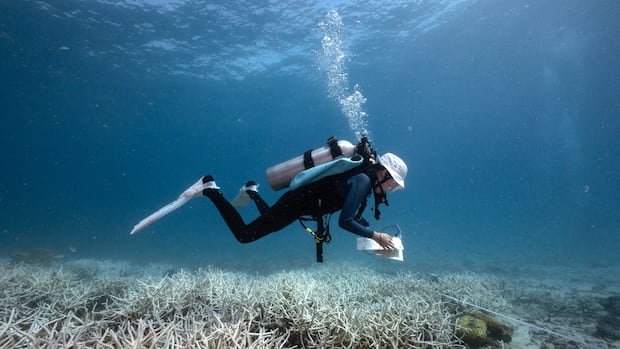

A recent global report highlights a significant decline in the proportion of the world’s coral reefs covered by living, stony hard corals. With an impending record-breaking El Niño event on the horizon, researchers suggest that this natural warming phenomenon could be more intense than in the past, as evidenced by changes in coral skeletons.
The Status of Coral Reefs of the World 2025 report reveals that marine heatwaves and global bleaching events have severely impacted coral ecosystems worldwide, leading to a decline in hard coral coverage to around 25%. This marks a substantial decrease from the 30-40% coral cover observed in the 1980s.
Experts warn that the rate of coral cover loss has accelerated in recent years, with a concerning 9.5% decline compared to previous decades. This trend underscores the increasing frequency of extreme ocean heat events, making the window for coral recovery shorter.
The report, based on data from nearly 37,000 reef sites, shows a consistent downward trend in hard coral cover since 1980, particularly following global bleaching events where corals expel symbiotic algae due to rising ocean temperatures. While corals can recover given time, the frequency of such events, exacerbated by climate change, poses a threat to their resilience.
Researchers emphasize the urgent need for global and regional action to protect coral reefs, which support a quarter of marine life and contribute significantly to economies and coastal protection worldwide. Efforts to mitigate overfishing, pollution, and coastal development are crucial for enhancing coral resilience in the face of escalating environmental challenges.
As the oceans continue to absorb excess heat from greenhouse gases, marine heatwaves are becoming more severe and frequent, affecting even regions that have shown growth in coral cover. Improved monitoring efforts are essential to better understand the dynamics of coral reefs and implement effective conservation strategies.
Despite the challenges, experts remain hopeful that with sustained efforts to reduce greenhouse gas emissions and implement conservation measures, there is still a chance to enhance coral reef resilience. However, the urgency to address climate change and its impact on ocean temperatures is paramount to prevent further coral degradation.