

After a prolonged effort spanning almost eight years, Kimberley City has successfully secured $400,000 to conduct a study on the potential impact of wildfires on its drinking water supply. The initiative was triggered by the 2018 Meachen Creek fire, which raised concerns about the susceptibility of local water sources.
Mathieu Bourbonnais, an assistant professor at the University of British Columbia (UBC) Okanagan and co-director of the Centre for Wildfire Coexistence, emphasized the importance of recognizing the environmental dependency for drinking water. He highlighted that wildfires are altering the behavior of water systems, which are crucial for providing safe drinking water.
Kimberley’s drinking water is sourced from the Mark Creek and Matthew Creek watersheds. The project’s primary objective is to identify risks associated with wildfires and devise strategies to mitigate these risks without compromising the water supply.
The recent Matthew Creek wildfire led to an evacuation alert for Kimberley, underscoring the immediate threat to the city’s watersheds. While wildland fire ecologist Bob Gray mentioned that the recent fire is not expected to significantly disrupt water movement, the concern remains for larger and more severe fires impacting Kimberley’s drinking-water watersheds.
Severe wildfires have the potential to devastate vegetation and soil, leading to increased erosion, sedimentation in streams, and alterations in snow accumulation and melting processes, ultimately affecting water flow timing in reservoirs.
To anticipate future wildfire scenarios, Bourbonnais’s lab at UBC Okanagan is collaborating with the city and Gray to model potential fire behaviors in the Mark Creek watershed. The research will encompass forest conditions, weather patterns, and climate change projections up to 2060, examining the impact of severe fires on water quality, streamflows, and reservoir water inflow timing.
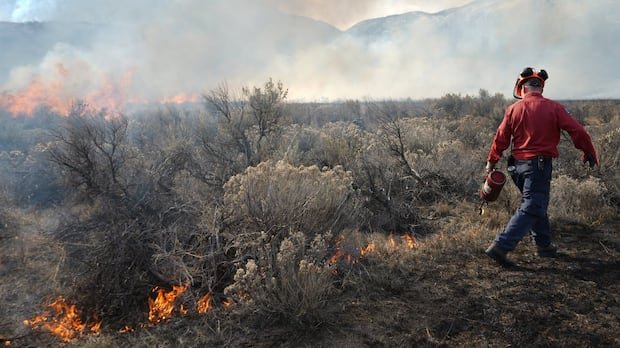
The study will also identify suitable locations for forest thinning, harvesting, and prescribed burning to reduce wildfire risks. However, Bourbonnais emphasized the need to balance wildfire mitigation efforts with the preservation of hydrological integrity.
Gray emphasized the importance of intentional planning to avoid adverse effects such as erosion and increased water flows resulting from mitigation measures. The project, funded by the Columbia Basin Trust and the city, is expected to span two years and aims to provide valuable insights for future wildfire mitigation strategies and planning tools that can be adapted by other communities.
The research highlights the proactive approach required to safeguard water supplies against the escalating threat of wildfires, emphasizing that the risk of inaction outweighs the risks of proactive measures.