
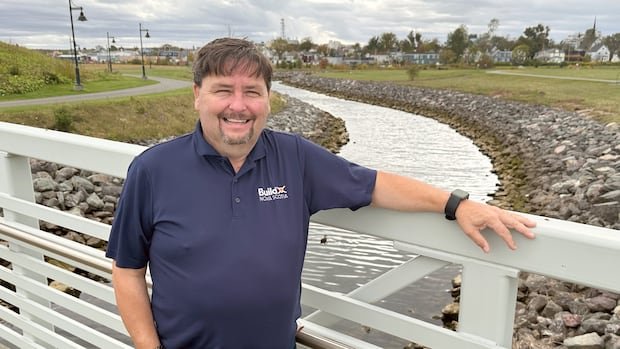

Fish have started reappearing in the streams near the previous tar ponds and coke ovens locations in Sydney, N.S., indicating a positive development post the cleanup of a century’s worth of steel and coal industry remnants in Cape Breton. The $400 million remediation was carried out by the Sydney Tar Ponds Agency, which later merged into Nova Scotia Lands and now operates under Build Nova Scotia, responsible for overseeing water quality in the streams flowing through the former industrial areas.
According to Donnie Burke, a senior director at the agency, findings from an independent engineering firm demonstrate the effectiveness of the remediation efforts. He mentioned during a recent tour that the current observations are either stable or showing improvement, which is promising. The former coke ovens area was covered with slag rock residue from the steel plant, while the infamous tar ponds, previously recognized as Canada’s most hazardous waste site, were sealed with concrete.
Additionally, Coke Ovens Brook, Wash Brook, and Muggah Creek underwent cleanup processes, and the surrounding areas were landscaped to channel surface water into the streams. Moreover, groundwater from the coke ovens site is directed to a treatment facility before being discharged back into the streams. To complete the restoration, both sites were covered with topsoil and grass.
Presently, the former tar ponds have been transformed into Open Hearth Park, offering amenities such as sports fields, a playground, walking paths, and open spaces. The coke ovens location has been repurposed as an open field used for activities like cricket, walking, and snowmobiling during winter. Burke confirmed that water analyses indicate no harmful substances are being released from the tar ponds cap.
Although occasional spikes in heavy metals or industrial chemicals are noticed at the former coke ovens site, especially after heavy rainfall, the monitoring system promptly detects these fluctuations, allowing adjustments to the water treatment process. Burke acknowledged the presence of minor irregularities but emphasized that overall stability or improvement has been observed since the implementation of the cover.
Water quality assessments are conducted in the streams and beneath the former coke ovens cap through various wells strategically positioned across the sites. A recent study from Cape Breton University revealed the return of a small fish species to the streams, with provincial staff observing trout eggs and fry in Coke Ovens Brook, a surprising development according to Burke.
Dr. Katherine Jones, a biology professor at CBU, previously studied mummichogs in poor health at the tar ponds before the cleanup. Following a pilot study supervised by her student Hannah MacKinnon last year, it was found that the fish showed improved health conditions, with the disappearance of previously observed symptoms like fin rot and bone abnormalities.
Jones suggested that further investigations are required to ascertain if local fish are still impacted by the remediated sites and expressed interest in conducting DNA tests to determine their origin. Burke confirmed governmental commitment to monitoring the sites for 25 years post-cleanup, with regular updates available on Build Nova Scotia’s website. He expressed optimism, noting that the ongoing monitoring indicates positive trends at the halfway mark.
These developments highlight the progress made in restoring the environmental health of the former industrial sites in Sydney, N.S., marking a significant milestone in the region’s environmental recovery efforts.