
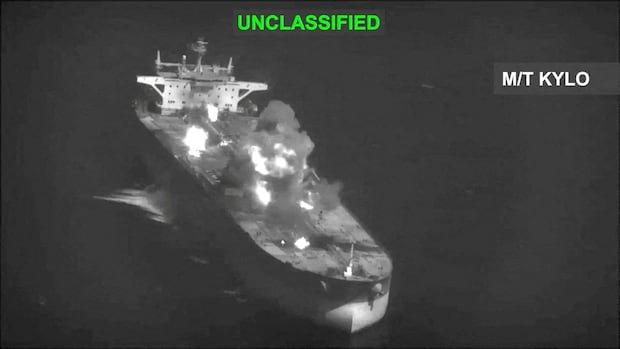

U.S. military forces have reportedly engaged three Iranian oil tankers in response to ballistic missile attacks on Navy warships, with a warning to potentially eliminate Iran’s vulnerable oil fleet. Experts have labeled this action as a perilous escalation following previous Iranian assaults on commercial maritime vessels.
These strikes, occurring shortly after President Donald Trump downplayed the conflict as insignificant, mark a return to hostilities following a period of intermittent warfare that began with U.S. and Israeli strikes on Iran in February. With both sides aiming to inflict military and economic repercussions, diplomatic efforts have collapsed.
According to the military’s report, a U.S. aircraft carrier and a destroyer evaded multiple unprovoked Iranian assaults while on patrol in the region, resulting in no U.S. casualties. The statement indicated that two Iranian oil tankers were rendered inoperable, with a third, empty vessel being destroyed.
The U.S. government asserted that the targeted tankers were linked to a clandestine network financing Iran’s Revolutionary Guard and its regional proxies. In response, Iran’s state media reported that Iran retaliated by targeting three American vessels alongside the oil tankers, although this claim is yet to be verified.
Tensions increased as Iran reportedly struck a U.S. aircraft carrier with a ballistic missile, indicating a shift towards more aggressive actions. The U.S. Central Command’s Admiral Brad Cooper emphasized the readiness to protect American forces and dismantle Iran’s exposed oil fleet if necessary.
Iran condemned the strikes as war crimes and placed responsibility for escalating U.S. aggression on Washington and its allies. Amid ongoing warfare and disruptions in Iranian port operations, the extent of targeting Iranian oil tankers remains unclear.
These recent confrontations occurred after a period of relative calm, with the Strait of Hormuz and surrounding Iranian areas becoming focal points once again. The resurgence of violence followed U.S. attempts to intensify economic pressure on Tehran, prompting Iran’s senior leadership to brace for prolonged conflict despite calls for negotiations.
As the war’s dynamics evolve, the international community watches closely as Iran’s nuclear program, a key catalyst for the conflict, remains unresolved. Diplomatic efforts have faltered, leading to potential U.N. Security Council intervention over Iran’s nuclear compliance issues.
Notably, the strategic significance of the Strait of Hormuz in global energy trade has underscored Iran’s leverage in the conflict, impacting international maritime navigation and security. The U.S. military continues to play a role in safeguarding shipping routes in the region while Iran asserts control and targets specific vessels, albeit with reduced overall traffic flow.