
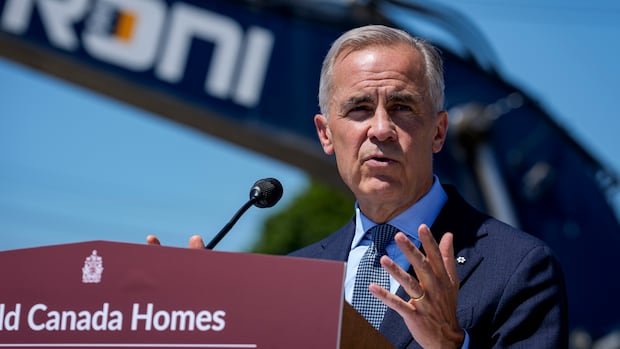

A little over a year ago, Prime Minister Mark Carney made an announcement in Ottawa about the launch of Build Canada Homes, a federal initiative aimed at addressing the housing crisis and expediting residential construction. This initiative by the agency is set to increase the production of affordable housing, responding to concerns raised by industry leaders regarding the slow pace of housing development nationwide.
Build Canada Homes has committed to supporting the construction of approximately 19,000 affordable units across the country, with only about 2,000 units currently under construction. Dave Wilkes, the president and CEO of the Building Industry and Land Development Association in Toronto, expressed a desire for faster progress, emphasizing the industry’s impatience when it comes to timelines.
Having recently become a Crown corporation after the Build Canada Homes Act received royal assent in July, the agency has been navigating bureaucratic processes, securing land transfers, and finalizing intergovernmental agreements over the past year. According to Build Canada Homes spokesperson Joshua Coke, this is just the beginning, as the demand for affordable housing in Canada significantly surpasses the current supply.
While the housing agency primarily focuses on non-market housing, it is also collaborating with developers to create affordable homes for the middle class. The goal is to address the housing affordability challenge by accelerating construction and increasing production capacity, as highlighted by Coke.
Looking back, Kevin Fettig, president of CMI Financial, highlighted a three-decade absence of federal funding and construction of affordable housing under both Conservative and Liberal governments. He mentioned that the lack of focus on affordability had gradually become a pressing issue. Federal Housing Minister Gregor Robertson acknowledged this historical neglect, emphasizing the current shift in approach.
Build Canada Homes aims to empower builders, developers, and community partners to expedite residential projects, with Fettig optimistic about the positive outcomes in the long run. Addressing the significant supply gap in the housing market, CMHC chief economist Mathieu Laberge stressed the need to double the pace of housing starts to restore affordability levels across the country.
Laberge noted that roughly 417,000 to 469,000 units need to be built annually by 2036 to meet affordability goals, as the current supply shortage poses a risk to future affordability. Wilkes highlighted the positive impact of initiatives like the HST rebate and reduced development charges in recalibrating overheated housing markets, leading to increased housing supply.
Recently, a partnership between Ottawa and Alberta was announced to construct at least 1,460 affordable apartments and townhouses through Build Canada Homes, addressing the growing demand for housing in the province. The mandate of the new Crown corporation includes promoting modern construction methods to expedite housing projects and enhance affordability.
For details on upcoming developments in Alberta, Build Canada Homes refrained from sharing specific information at this time. The focus remains on modernizing the construction industry to enable faster and more cost-effective building processes, as emphasized by Minister Robertson.