
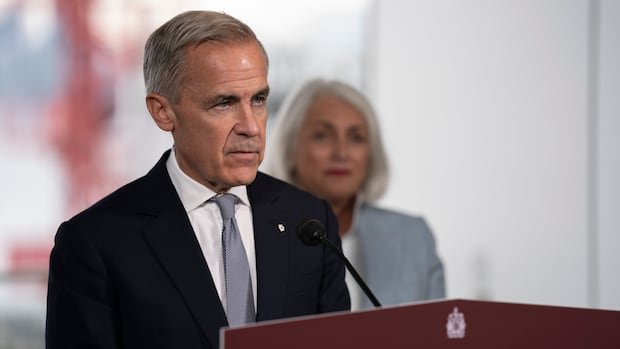

Prime Minister Mark Carney unveiled a $1.2 billion federal investment in safeguarding the oceans on Tuesday, coinciding with imminent decisions on a new West Coast pipeline and the expansion of a prominent port in Metro Vancouver. Carney emphasized the potential environmental strains from increased marine activity and stressed the need to fortify marine life protections. The allocated funds will support various initiatives, including enhancing the Canadian Coast Guard’s monitoring capabilities, implementing a national near-shore weather forecasting system, and developing a marine mammal oil spill response strategy.
Furthermore, the plan involves upgrading search and rescue facilities, enhancing seabed mapping efforts, and improving fisheries conservation programs. The announcement, made in North Vancouver, preceded a looming deadline for Ottawa to determine the national interest status of a proposed pipeline connecting Alberta to British Columbia’s southern coast. Carney highlighted the economic benefits and job creation potential of the pipeline while emphasizing the importance of responsible development practices.
Additionally, Carney reassured that the proposed pipeline route would avoid environmentally sensitive areas and align with the existing Trans Mountain pipeline trajectory, with the continued ban on tankers along B.C.’s north coast. The announcement coincided with upcoming Alberta referendum discussions on separation from Canada and the confirmation of LNG Canada’s Phase 2 expansion in Kitimat, B.C.
Carney has also shown support for expanding the Port of Vancouver’s Roberts Bank terminal to diversify export markets and enhance economic growth. Efforts to protect marine life, particularly the endangered southern resident killer whales, were underscored, with plans to address underwater noise disturbances affecting whales across all three Canadian coasts. Rigorous conditions will be enforced during construction to ensure marine life protection, with a commitment to halt operations if killer whales approach the construction site.
The funding will also facilitate Indigenous-led stewardship programs, bolster fisheries enforcement, and support collaborative conservation and emergency preparedness efforts in the Great Bear Sea region. Coastal First Nations expressed appreciation for the funding, emphasizing the need for responsible shipping practices amid anticipated vessel traffic increases. However, concerns were raised by advocacy groups like the Wilderness Committee, citing insufficient funding for ocean protection compared to investments in infrastructure projects like the Roberts Bank expansion.