
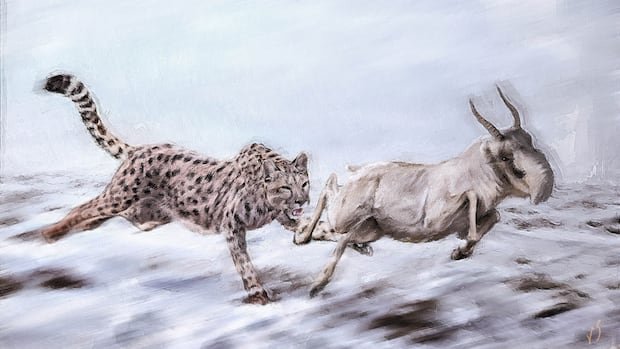

DNA analysis from the University of California has revealed surprising findings about bones discovered in the Bluefish Caves and a mine site in northern Yukon. Initially thought to belong to an ice-age puma or cougar, the bones turned out to be from the extinct American cheetah, known as Yukon Miracinonyx.
Grant Zazula, a Yukon paleontologist, was astonished to learn that the bones were not cougars but cheetahs. This discovery, made possible by advancements in genetic analysis, sheds new light on the creature’s diet and habitat during the ice age.
Researchers were puzzled by the presence of American cheetahs in the Arctic tundra, as they were believed to have specialized in hunting American pronghorn antelope in grassy plains. To unravel this mystery, stable isotope analysis was employed to investigate the cheetahs’ diet and lifestyle.
The study revealed that Yukon cheetahs primarily fed on fish, a behavior uncommon in both past and present-day cats. This unexpected dietary preference indicates a unique adaptation to the ecosystem and highlights the complexity of the ice-age environment.
Furthermore, genetic analysis showed that Miracinonyx was more closely related to North American pumas than African cheetahs. The study also suggested that the low genetic diversity of the cheetah population may have played a role in their eventual extinction.
The presence of these fishing felines in the Arctic has led Zazula to propose renaming the population from ‘American Cheetah’ to ‘Yukon Cheetah.’ This discovery underscores the ongoing potential for new insights from even the smallest bone finds in the Yukon region.