
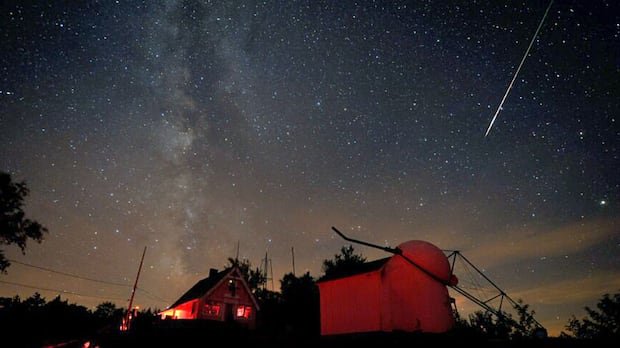

In August, skywatchers can enjoy the spectacular Perseid meteor shower, one of the best annual displays. This year, the peak of the Perseids coincides with a partial solar eclipse, making it a double astronomical treat.
The Perseids are renowned for their abundance and brightness, making them a favorite among meteor enthusiasts. The peak viewing night is expected to be on August 12-13, coinciding with a new moon, providing optimal viewing conditions without interference from moonlight.
Peter Brown, a meteor astronomy expert from Western University, anticipates a remarkable display of Earth-grazing meteors during this year’s Perseids. These meteors enter the Earth’s atmosphere and then shoot back into space, creating a stunning visual experience.
The shower is projected to peak around midnight Eastern Daylight Time, potentially offering up to 120 meteors per hour under ideal dark-sky conditions. While viewers may not see that many meteors, the increased rate enhances the chances of witnessing a dozen or more bright meteors during the peak viewing hours.
For those eager to catch a glimpse of the Perseids, it’s advisable to head out early as the shower has been active since July 17, with meteor activity increasing each night leading up to the peak. Checking the weather forecast and finding a dark location away from light pollution can enhance the viewing experience.
The radiant point of the Perseids lies in the constellation Perseus, visible low in the eastern sky after sunset. However, meteors can streak across the entire sky, offering a celestial spectacle for observers.
Additionally, alongside the Perseids, other meteor showers like the southern delta Aquariids, alpha Capricornids, and kappa Cygnids are also active, adding to the “meteor Christmas” experience.
As a bonus, on August 12, a partial solar eclipse will be visible in select regions, although not in Canada. Nevertheless, sky gazers are advised to use approved solar eclipse glasses for safe viewing of this celestial event.
Astronomers emphasize the significance of witnessing such astronomical phenomena, showcasing the dynamic interactions between the Earth, moon, and sun, providing a humbling experience for viewers.