
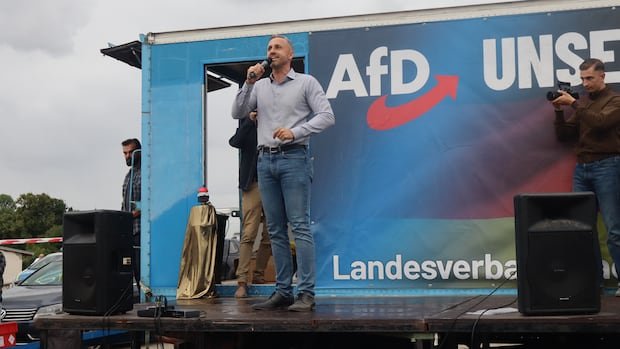

In a serene town in eastern Germany named Quedlinburg, a large crowd gathered to listen to a prominent far-right figure share his vision for the nation’s future on a sunny August day. Many arrived on their iconic Simson motorcycles, which have become a symbolic representation for the Alternative for Germany (AfD) party, to meet Ulrich Siegmund, the party’s candidate for leadership in Saxony-Anhalt, an eastern state.
The AfD is experiencing a surge in popularity according to polls, and in an upcoming regional election, it stands a chance of becoming the first far-right party to hold state power in Germany since World War II. Experts predict that the AfD could gain substantial political influence over state resources, particularly in education. The party aims to implement initiatives such as segregating classrooms for refugees, fostering ties with Russia through student exchange programs, and pushing a patriotic agenda that shifts focus away from Germany’s Nazi history.
During the gathering in Quedlinburg, 17-year-old Luca Stemmler expressed admiration for Siegmund, describing him as an inspirational figure. On the other side of the street from the motorcycle rally, counter-protesters waved rainbow flags and sang “All You Need Is Love” by The Beatles in solidarity against the AfD, which some fear may jeopardize fundamental human rights and alter key elements of Germany’s postwar democratic structure.
The AfD’s rise to power could potentially disrupt the political landscape as mainstream parties have historically refrained from collaborating with extremist groups. In Saxony-Anhalt, the AfD is leading in opinion polls at 42%, as per research by Infratest-Dimap. The party also holds a national lead in opinion polls at 28% and secured the second-highest number of seats in the 2025 federal election.
Initially founded as an anti-Euro party in 2013, the AfD shifted its focus to migration issues in 2015 amid the influx of refugees into Germany. The party’s manifesto for Saxony-Anhalt includes proposals like banning non-EU immigration deemed troublesome, establishing deportation centers, and setting up separate classrooms for refugee children.
Akinola Sanyaolu, a Nigerian immigrant residing in the capital city of Magdeburg, has encountered racism in his daily life but remains hopeful about his future in the country. The AfD’s objectives, outlined in their government manifesto, include prohibiting Pride flags in schools and revising historical curricula to highlight positive aspects of Germany’s past.
As the AfD gains momentum, concerns about its potential impact on German politics are mounting. Winning a state election could pave the way for the party to exert influence at the federal level, potentially challenging legislative efforts. Despite constitutional safeguards, the AfD’s normalization as a legitimate political entity could pose long-term challenges to Germany’s democratic fabric.
The AfD’s growing popularity has been attributed to dissatisfaction with mainstream parties, coupled with global uncertainties. External endorsements and criticisms from notable figures like U.S. Vice-President JD Vance and entrepreneur Elon Musk have further shaped the party’s image. If successful, the AfD could use its position to advance its political narrative, whether in government or as a perceived underdog.
The unfolding situation in Saxony-Anhalt highlights the intricate dynamics at play in Germany’s political landscape and raises critical questions about the future trajectory of the country’s democracy.