
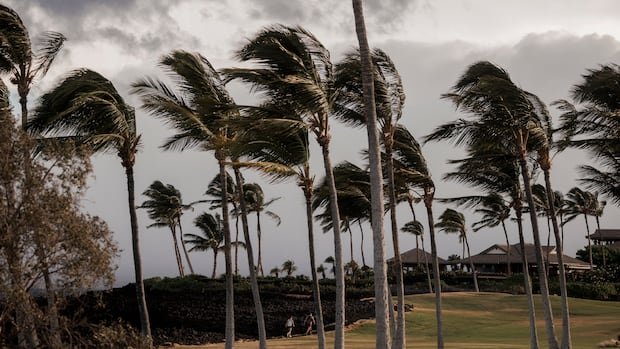

Hurricane Lala is heading towards Hawaii’s Big Island with the potential for a direct hit, marking the first time in 155 years that the island faces a hurricane landfall. The National Hurricane Center reported that Lala has strengthened to a Category 1 hurricane with maximum sustained winds of 120 km/h. The eyewall is projected to pass over or near the island’s southern tip by evening, bringing intense winds to the volcanic slopes high above sea level.
Forecasters anticipate significant rainfall of up to 63.5 centimeters in the island’s elevated areas, particularly around the towering Mauna Kea volcano. This heavy rainfall could trigger dangerous mudslides in remote mountainous regions where residents live in makeshift dwellings, prompting authorities to advise swift evacuation to safe shelters.
Local resident Bobby Camara, 75, shared his preparedness plans, expressing a mix of caution and hope as the storm approached. Essential supplies like fuel for chainsaws and vehicles were in high demand as residents braced themselves for potential power outages and other storm-related challenges.
Hawaii Governor Josh Green warned of severe flooding and potential wildfires sparked by strong winds across the island chain, as Hurricane Lala posed a significant threat to the region. A portion of the Big Island’s population experienced power outages, highlighting the storm’s disruptive impact.
Residents, like Mike Caputo from Keaau, emphasized concerns about flash flooding and fallen trees, particularly the hazard posed by large albizia trees. Caputo, a local fire captain, took precautions to trim trees ahead of the storm to prevent blockages on roads and ensure safety.
The Big Island was placed under a hurricane warning, while tropical storm warnings were issued for multiple other islands in the vicinity. The latest projections indicated that Lala was expected to make a close approach to the southern tip of the Big Island, heightening the urgency for residents to take necessary precautions.
Shelters were opened, events were canceled, and ranchers were advised to leave cattle in open pastures to reduce the risk of structural collapse. Vanessa Almanza, a meteorologist from the National Weather Service in Honolulu, underscored the potential for widespread destruction even without a direct landfall.
Officials projected varying levels of rainfall across the islands, with Maui and the lower elevations of the Big Island expected to receive between 20.3 and 30.5 centimeters of rain. Rep. Jeanné Kapela stressed the importance of vigilance, particularly for vulnerable communities in remote and rural areas that may be less equipped to withstand the storm’s impact.
The looming threat of wildfires during windy conditions added another layer of concern, as dry and breezy weather conditions heightened the risk. The community’s heightened awareness of weather-related hazards, following past disasters like the 2023 Lahaina fire during extreme winds, underscored the need for continued vigilance.
Reflecting on historical precedents, experts recalled the devastating impact of past hurricanes, such as Hurricane Iniki in 1992, which caused significant damage and casualties on Kauai. The unpredictable nature of storms emphasized the importance of preparedness and proactive measures to mitigate risks and safeguard communities against potential disasters.