
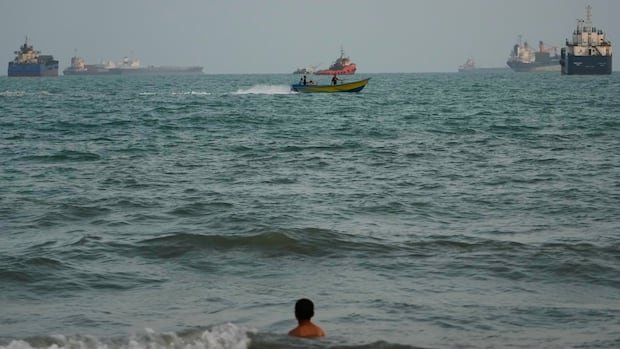

Iran’s new head of the Supreme National Security Council announced plans to establish an “exclusion zone” outside the Strait of Hormuz to target vessels believed to be trying to pass through the waterway. The announcement follows the U.S. striking three Iranian oil tankers in response to Tehran firing ballistic missiles at American warships, escalating tensions. The exclusion zone will extend from the U.S. naval blockade line into the Persian Gulf, with ships identified in the area facing sanctions.
The exact location of the U.S. blockade remains unclear, as it targets Iranian ports to prevent oil shipments. The blockade, supported by over 20 U.S. warships, has redirected 92 commercial vessels and disabled three as of Sunday. Amidst collapsed negotiations, the U.S. is intensifying economic pressure on Iran, leading to ongoing hostilities.
Iran reported striking an unmanned U.S. vessel entering the Strait of Hormuz, a claim dismissed by the U.S. military as false. The conflict, which began with U.S. and Israeli attacks on Iran in February, has seen intermittent fighting despite a ceasefire in June. Canada condemned Iran’s actions, signaling international concern over the escalating situation.
Recent attacks have resumed after a period of calm, with the U.S. targeting the strait and Iranian communities. The Trump administration is responding militarily while imposing financial restrictions on entities handling Iran’s finances. Iran’s new leadership remains defiant amid sanctions, utilizing alternative routes to export oil.
The focus shifts to the strategic Strait of Hormuz, vital for global energy shipments, as negotiations on Iran’s nuclear program falter. Iran’s skepticism towards mediators and the collapsed agreement with the U.S. reflect the deteriorating diplomatic relations. Energy Secretary Chris Wright highlighted the importance of the strait, with an estimated nine million barrels of oil passing through daily, affecting global energy markets.
Despite challenges, oil flows through the strait are maintained with U.S. naval support, ensuring safe passage for tankers. Iran continues trading oil, adapting to circumvent restrictions, while the maritime security situation remains volatile. The ongoing conflict underscores the significance of the Strait of Hormuz in global geopolitics.