
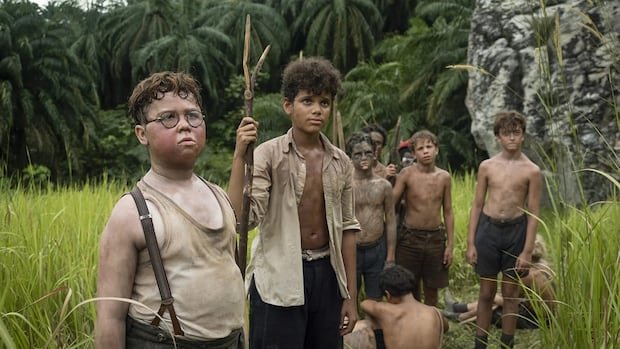

A new four-part adaptation of William Golding’s 1954 novel “Lord of the Flies” revisits the transition from structured school life to chaotic island existence, shedding light on the boys’ pre-castaway experiences. Scripted by Jack Thorne, known for co-creating “Adolescence,” and helmed by award-winning director Marc Munden, the series is a collaboration between Eleven, One Shoe Films, and Sony Pictures Television for BBC iPlayer, BBC One, and Stan.
The storyline follows a group of British schoolboys marooned on an uninhabited island following a plane crash. As Ralph strives to maintain order, Jack lures the boys into hunting and a power struggle for leadership. Unlike previous adaptations that deviated from the original material, this miniseries brings the characters back to their British schoolboy roots and the early 1950s setting. Here are key insights into the new series:
1. A Return to the Novel’s Era:
The 2026 series reverts to Golding’s vision of British schoolboys in the early 1950s, emphasizing how their upbringing amid post-World War II turmoil influences their conduct. Thorne challenges the notion of inherent savagery in humanity portrayed by Golding, suggesting that the boys’ actions stem from their exposure to wartime trauma.
2. Piggy’s Evolution:
In a departure from the novel and previous adaptations, the character known as “Piggy” is revealed to be named Nicholas or Nicky in this rendition. The dynamic between Ralph and Piggy evolves, showcasing a journey of trust, intellect, and camaraderie.
3. Ralph’s Identity:
Ralph is depicted as mixed-race, with a black mother and white military father, adding layers to his struggle for authority and acceptance among the boys. Despite facing adversity, Ralph remains steadfast in his principles.
4. Character Depth and Backstories:
The miniseries delves into the pasts of Piggy, Jack, Simon, and Ralph through flashbacks, revealing the impact of their family dynamics on their present actions. It sheds light on the characters’ vulnerabilities and motivations.
5. The Power of the Choir:
Visual and social hierarchies within the group, symbolized by the choir’s uniforms, play a significant role in shaping power dynamics and alliances among the boys. Jack’s alluring volatility contrasts with Ralph’s stability, attracting followers seeking excitement over order.
6. Adult Presence:
Unlike the 1990 film, the series eliminates the adult pilot character, intensifying the boys’ isolation and internal conflicts. The absence of external authority underscores the psychological struggles and themes of self-inflicted fear and chaos.
7. Evocative Visuals:
The adaptation opts for a darker, more foreboding aesthetic, utilizing the lush Malaysian rainforest as a backdrop for the island’s transformation from paradise to nightmare. Cinematic techniques enhance the eerie atmosphere, reflecting the characters’ descent into turmoil.
The series serves as a cautionary tale on the impact of adult influences on children and the consequences of unchecked behavior. “Lord of the Flies” premieres on CBC Gem on Oct. 22, with subsequent weekly broadcasts on CBC TV.