
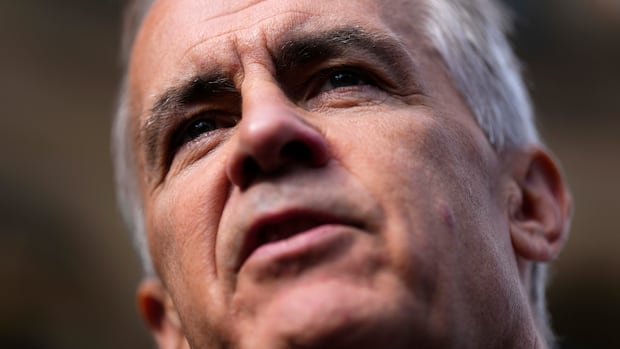

Prime Minister Mark Carney has cautioned Canadians about the repercussions of shifting away from the United States, emphasizing that while there will be costs, the alternative would be considerably more detrimental.
Carney, in a recently released video following the activation of Canada’s retaliatory tariffs, reiterated the country’s strategy to counter the U.S. trade dispute by forging new trade agreements with other nations to reduce dependence on the U.S.
“We possess all necessary resources to pivot and thrive,” Carney stated. “This shift will come with a price tag. Every action incurs a cost, but the expense of inaction far outweighs it.”
The video is part of a series Carney initiated last spring to keep Canadians updated on government policies and responses to U.S. trade measures.
Carney emphasized that the objective of these policies is to emerge stronger and more resilient, ensuring that no nation can exert control over Canada and enabling Canadians to live according to their preferences.
In his video address, Carney accused the U.S. of attempting to impose restrictions that would limit Canada’s trade options with other nations and impede its efforts to support and safeguard the French language and culture.
Federal Conservatives have urged Carney to disclose the full details of the rejected deal and called for Parliament to reconvene earlier than the scheduled date of September 21.
Highlighting the impact of Trump’s tariffs, Carney mentioned that the U.S. has specifically targeted Canadian industries such as steel, aluminum, auto, and lumber, affecting workers in Ontario, Quebec, and British Columbia more significantly than those in Alberta and Saskatchewan.
Carney vowed to resist U.S. attempts to dominate Canada, emphasizing that Trump had previously entertained the idea of annexing Canada as a U.S. state.
Canada retaliated with tariffs in response to the recent 50% tariffs imposed by the U.S., targeting various products including honey, hockey sticks, milk, and cheese.
Carney stressed the necessity of these tariffs to protect Canadian workers, companies, and communities, emphasizing the importance of fair trade practices.
In his video message, Carney referenced historical trade conflicts with the U.S., drawing parallels to past tariff disputes and asserting Canada’s resilience in the face of economic pressures.