
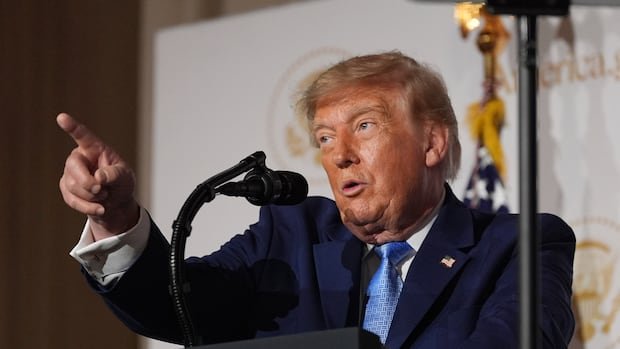

U.S. President Donald Trump announced on Tuesday that he, along with a group of prominent leaders in the artificial intelligence industry, had signed a voluntary agreement at the White House meeting. This accord entails both internal and external reviews of AI technology.
During a press briefing outside the West Wing, Trump expressed his approval of the industry’s self-regulation efforts, emphasizing the importance of companies policing themselves.
The announcement came after a comprehensive meeting between Trump and key executives from leading tech companies investing heavily in AI infrastructure. These firms are constructing AI-related facilities, such as data centers, in various communities nationwide, sparking bipartisan opposition. Some executives have advocated for a slowdown in AI development following instances where AI systems malfunctioned.
Despite calls for caution from some AI executives, Trump reassured that the U.S. government would not impede AI advancement or endorse restrictive measures. He highlighted the significance of AI’s potential growth, comparing it to the Industrial Revolution, and unveiled an AI chatbot, America.gov, designed to assist Americans in accessing government services.
Prominent figures in the AI industry, including Dario Amodei, Greg Brockman, Jeff Bezos, and Elon Musk, attended the White House meeting. The seating arrangement placed Nvidia CEO Jensen Huang next to Trump, with Musk seated on the other side. Notable CEOs from Google, Meta, and Microsoft were also present.
While some AI executives have raised safety concerns, others like Huang and Zuckerberg have downplayed fears of runaway AI, stressing the responsibility of companies to ensure product safety.
Vice-President JD Vance, Treasury Secretary Scott Bessent, and Louisiana Rep. Mike Johnson were among the officials in attendance at the event where America.gov was introduced. This initiative aims to streamline processes like obtaining passports online.
Following the meeting with tech CEOs, Trump commended the agreement on self-regulation within the AI industry and highlighted the collaboration with regulatory bodies like the Department of Justice and the FBI.
Trump also addressed the issue of data centers facing opposition in local communities, suggesting that companies could address concerns by supporting local schools or reducing energy costs to mitigate resistance.
Meanwhile, OpenAI CEO Sam Altman emphasized the company’s increased focus on safety, announcing a temporary halt in the deployment of a new model due to safety considerations.
Geoffrey Hinton, a prominent AI pioneer, expressed doubts about Trump’s understanding of AI technology, likening the risks associated with AI development to owning a potentially dangerous pet. Hinton advocated for federal oversight of AI safety similar to the FDA’s role in regulating food and drugs.
Trump positioned AI development as a global competition, particularly between the U.S. and China, asserting America’s leadership in the race. While some collaborative efforts with China have been initiated, Trump emphasized maintaining a competitive edge over China in AI advancements.