

A report from a U.S. government oversight agency has been published, detailing the ramifications of the war with Iran. The findings highlight the military’s significant deficiencies in advanced weaponry and provide the first public assessment of the destruction inflicted on American aircraft, military bases, and diplomatic missions in the Middle East.
On Monday, the Pentagon’s inspector general released a comprehensive report that gives an extensive overview of the conflict’s toll on American lives, taxpayer expenditures, and physical damage resulting from Operation Epic Fury, which has been estimated to cost $33.4 billion as of June 29. Secretary of War Pete Hegseth testified before Congress in late July, stating that the total cost of the war had reached $37.5 billion to date.
The report indicated that the U.S. engagement in the conflict with Iran “has led to strategic inventory deficiencies and exposed industrial bottlenecks for munitions replenishment” concerning advanced weapon systems. Experts have previously noted that it would take approximately three years for military contractors to restore advanced missile and defensive missile interceptor stocks to their pre-war quantities.
Despite ongoing reports of ammunition shortages, the Pentagon has consistently refuted such claims, asserting that the U.S. military possesses all necessary armaments to engage in any conflict. In a social media update on Monday, U.S. President Donald Trump claimed that the nation is “manufacturing more sophisticated and elite weaponry than ever before in our history.”

President Trump dismissed claims regarding the military’s shortage of munitions due to the conflict with Iran, asserting that those who leaked information to the media would be ‘hunted down’ and face ‘long prison sentences.’
Numerous U.S. installations and diplomatic sites impacted
The oversight report, which spans from April 1 to June 30, also confirmed that Iranian strikes caused damage and destruction to hundreds of facilities at U.S. bases in Kuwait, Bahrain, Qatar, the United Arab Emirates, Saudi Arabia, Iraq, Oman, and Jordan.
It highlighted that the U.S. naval installation in Bahrain, a primary logistics center for the Navy in the region, faced attacks from Iranian drones and ballistic missiles. U.S. Central Command had to reroute supply chains to alternative locations that were significantly farther away, including Diego Garcia, a U.S.-U.K. base situated in the Indian Ocean.
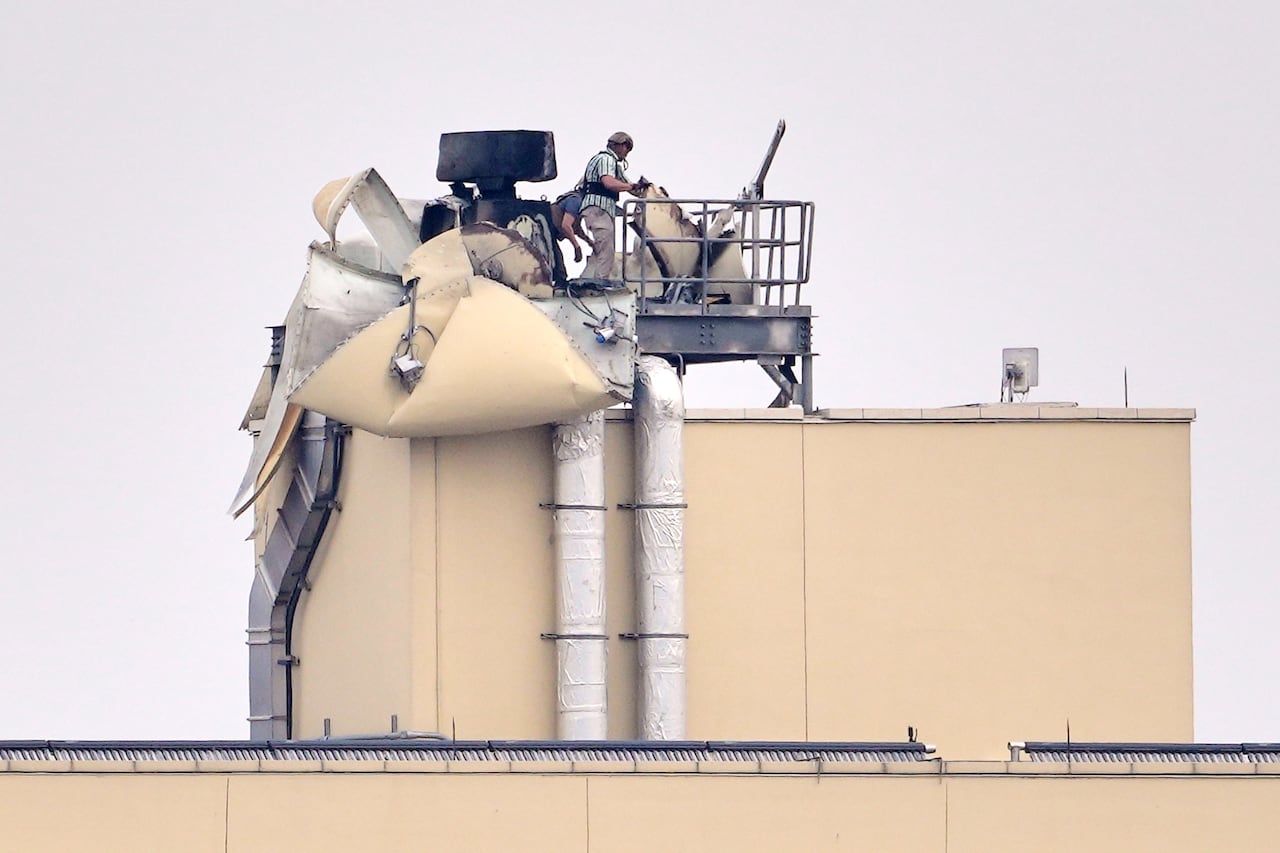
U.S. Embassy personnel assess the damage caused by a bombing in Baghdad on March 14. (Hadi Mizban/The Associated Press)
Hung Cao, the acting U.S. Secretary of the Navy, acknowledged in a recent interview with The Epoch Times that “they really devastated Bahrain” and mentioned that a task force is evaluating whether the base in Bahrain requires repairs to support U.S. forces in the area.
The report released on Monday also included insights from oversight bodies for the Defense and State departments, along with the U.S. Agency for International Development (USAID).
U.S. diplomatic locations in Kuwait, Saudi Arabia, the United Arab Emirates, and Iraq incurred physical damage due to Iranian attacks, amounting to costs of $184 million. Additionally, the conflict has led to delays in construction projects at multiple U.S. outposts in various nations, including Israel, Egypt, and Oman.
The State Department reported in early June that its other expenses related to the conflict totaled $113 million, with nearly $80 million allocated for contingency measures, including evacuation costs for U.S. personnel and their families, as well as other American citizens and eligible third-country nationals.
-
Who are the Houthis? How they could send oil prices surging even further
-
Diesel prices soar. Here are the potential impacts
Following the initial strikes by the U.S. and Israel against Iran on February 28, the State Department reported that approximately 9,000 U.S. citizens were evacuated from countries in the Middle East and Europe. The cost of this evacuation operation, which involved private and commercial flights as well as land and sea travel, exceeded $11 million by late June.
The majority of the evacuations occurred from Israel, with Iraq and Jordan following closely behind. Although only 1,200 Americans were evacuated from the United Arab Emirates, those flights to Istanbul, Athens, and Washington incurred the highest costs, exceeding $4 million.
Shortages in weaponry and arms sales
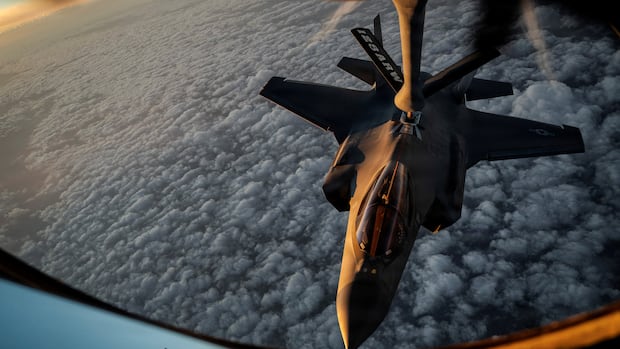
The report revealed that numerous American aircraft and drones were either destroyed or damaged due to Iranian actions, including the loss of up to 30 MQ-9 Reaper drones, each valued at around $30 million. Additionally, seven KC-135 refueling planes were either damaged or destroyed, with five of them hit by Iranian munitions while stationed in Saudi Arabia.
One more KC-135 crashed in Iraq, resulting in the deaths of six service members after colliding with another KC-135. These fatalities, along with the death of a helicopter pilot who crashed into the Arabian Sea, are categorized as occurring during non-hostile circumstances. Furthermore, eleven additional service members are recorded as “killed in action” across Kuwait, Iraq, Jordan, and Saudi Arabia.
The State Department indicated that over $44 billion in both emergency and non-emergency military sales occurred during this period, primarily benefiting Saudi Arabia. These transactions involved military helicopters, munitions, and advanced precision weapon systems.
Other nations in the region, including Qatar, Kuwait, the UAE, and Israel, also received substantial arms sales, as Iran retaliated against nearly all countries hosting a U.S. military base.
Tag: rewrite-pending