
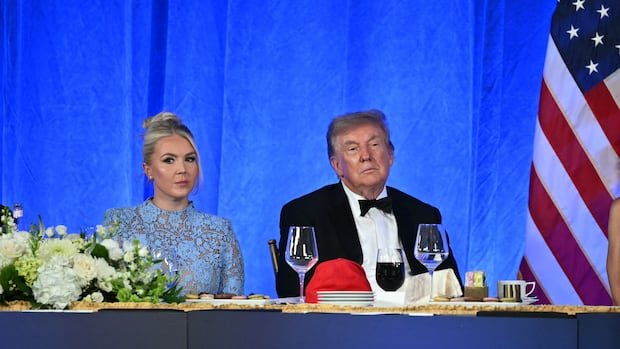

White House press secretary Karoline Leavitt will step down from her position at the end of the month, as announced by U.S. President Donald Trump on Wednesday. This departure leaves the president without one of his key advisors as the November midterm elections approach. Leavitt will transition to an external communications advisor and play a role in shaping the future direction of Trump’s “Make America Great Again” movement, according to statements from both her and the president.
In a recent social media post, the 28-year-old Leavitt expressed her intention to dedicate more time to her young children. Following the birth of her second child in May, she recently returned from maternity leave.
Describing Leavitt as a significant figure in the White House, Trump commended her leadership in advocating for justice, liberty, and freedom since 2018, notably during his historic re-election campaign in 2024. In a separate social media post, Trump praised Leavitt as one of the most exceptional White House Press Secretaries in history.
Reflecting on her time at the White House, Leavitt referred to it as “the honor and adventure of a lifetime.” She initially joined Trump’s 2024 campaign and later served as a transition spokesperson before assuming the role of White House press secretary, making her the youngest person ever appointed to that position.
Trump has not disclosed any plans regarding Leavitt’s successor for this prominent role.
Former principal deputy press secretary Harrison Fields lauded Leavitt’s unique abilities, stating that she possessed a deep understanding of Trump’s communication style and effectively engaged with the media to serve the president’s interests.
During her tenure, Leavitt and White House communications director Steven Cheung revamped the administration’s approach to media relations, a move that garnered praise from some of Trump’s supporters while drawing criticism from advocates of press freedom. The administration adopted a selective approach in granting media access to the president, departing from the longstanding practice established by the independent White House Correspondents’ Association. This included allocating a special “new media” seat in the briefing room to enhance the involvement of podcasts, newsletters, and emerging digital platforms in covering presidential activities.
The administration’s decision to restructure media access was perceived differently, with some viewing it as an acknowledgment of the evolving media landscape while others criticized it as a tool to reward favorable coverage from certain outlets.