
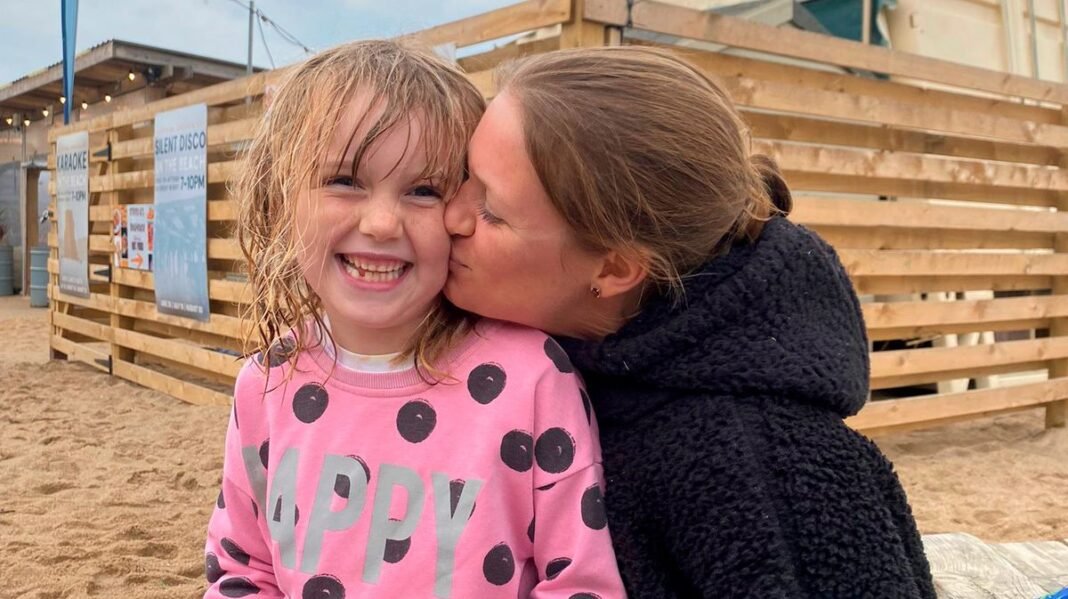

A mother shared that her seven-year-old daughter now avoids going near the ocean after contracting a parasite during a family holiday in Cornwall last year. Little Willow Clarke experienced severe symptoms for 12 days, including vomiting, weight loss, and delirium, eventually diagnosed with cryptosporidium, a bug often found in contaminated water sources.
Willow’s illness was so debilitating that she had to miss being a bridesmaid at her aunt’s wedding, a significant disappointment for her. This incident comes amidst concerns about health risks associated with swimming in seas due to sewage discharge.
Another case highlighted in the Channel 4 docu-drama “Dirty Business” tells the story of eight-year-old Heather Preen, who contracted e.coli after a trip to a beach in Devon in 1999, leading to her tragic death. This incident raised questions about the dangers posed by raw sewage in water bodies.
Alice Clarke, along with her sister and Willow, visited Carlyon Bay in Cornwall last summer, where Willow fell ill after being in the sea for a short time. Despite not swallowing water, Willow showed symptoms within hours, including extreme fatigue and high fever.
After days of vomiting and dehydration, Willow was diagnosed with cryptosporidium, requiring extended care and causing trauma to both Willow and her mother. Although physically recovered, Willow still fears the sea and refuses to go near it, indicating lasting emotional effects.
Alice is convinced that Willow contracted the parasite from the sea, as they took precautions like using bottled water during their trip. The financial strain of taking time off work to care for Willow added to the challenges faced by the family during this ordeal.
South West Water denied any responsibility for the illness, stating they do not have a storm overflow at Carlyon Bay. However, the presence of cryptosporidium in seawater from other sources remains a possibility, with studies suggesting its survival for extended periods.
The family’s experience serves as a cautionary tale about the potential risks of waterborne illnesses and the importance of water safety measures.