
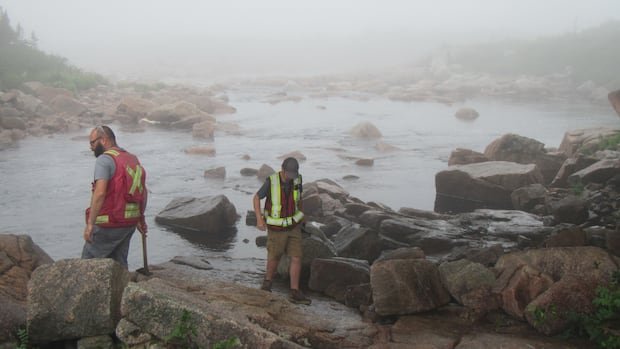

In Newfoundland and Labrador, the increasingly severe wildfire seasons are raising concerns for public safety and impacting routine activities in rural and remote areas, such as geoscience work crucial for the mining industry. Wildfires can render work areas inaccessible and lead to the reassignment of aircraft originally meant for scientific fieldwork to assist in firefighting efforts.
This situation has added complexity to the planning and execution of scientific programs, according to Energy and Mines Minister Lloyd Parrott. Despite facing challenges, the Geological Survey of Newfoundland and Labrador managed to operate within budget, with reduced helicopter usage mainly due to wildfires.
Geological survey scientists rely on helicopters, especially in Labrador, for accessing remote areas where drones are insufficient. Disruptions in helicopter travel can occur due to adverse weather conditions like high winds and wildfires. Minister Parrott confirmed that some helicopter resources supporting geoscience fieldwork were redirected to aid in wildfire suppression this summer, although the impact was less severe compared to the previous year.
The Geological Survey of Newfoundland and Labrador is actively conducting field projects, including data collection for rare earth elements in southeastern Labrador and geophysical surveys in the White Bay area. These projects, often jointly funded with the federal government, contribute valuable information for industry decision-making and investment.
Despite the challenges posed by wildfires, the province is experiencing record-high private spending on exploration work, totaling $283.3 million for the year. Amanda McCallum, executive director of Mining Industry N.L., emphasized the importance of public geoscience in driving investment, de-risking projects, and accelerating discoveries.
McCallum highlighted the sector’s resilience in managing wildfire disruptions, noting that industry continues to adapt field operations without major setbacks. The mining industry, a significant contributor to the province’s GDP, remains robust with 11 active mines and nearly 9,000 direct employees.
As of the latest update, the wildfire risk level in Newfoundland and Labrador is low, with only four active fires in certain regions. While the number of fires this year is lower than in 2025, the total area burned is larger. The mining sector remains vital to the province’s economy, showcasing resilience amid environmental challenges.