
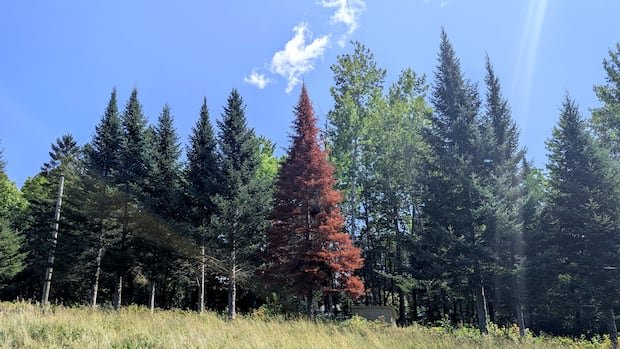

Balsam fir trees in New Brunswick are showing signs of distress as they turn red and wither following last year’s severe drought. Concerns are mounting about the survival of this iconic provincial tree. Professor Anthony Taylor, a forestry researcher at the University of New Brunswick, has been receiving reports from woodlot owners and witnessing the damage firsthand. The vibrant evergreens, often chosen as Christmas trees, are gradually losing vitality due to the impact of the drought on their growth. Taylor, who has been studying the effects of climate change on New Brunswick’s forests for an extended period, notes that similar die-offs of balsam fir occurred after exceptionally hot and dry summers in 1986 and 2018.
According to Taylor, the warm and dry conditions during a drought hinder the balsam fir’s ability to thrive. He explains that during drought conditions, the trees prematurely halt the photosynthesis process, which stunts their growth and prevents them from producing necessary energy reserves for essential metabolic functions and defense mechanisms. This vulnerability increases the likelihood of die-offs, especially if the trees are already stressed by insects or pathogens.
Additionally, balsam fir trees have shallow roots, making it challenging for them to access water during dry periods. Peter McKeil, a woodlot owner in Burtt’s Corner, observed the distressing effects of the drought on his trees as they progressively turn red from the lower branches upward. Despite losing approximately 100 trees so far, McKeil has managed to salvage some by processing them into lumber. He is adapting his harvesting practices to maximize the remaining fir’s value before more trees succumb to the unfavorable conditions.
McKeil foresees a grim future for the balsam fir in southern New Brunswick, attributing the species’ struggles to the worsening impacts of climate change. He emphasizes the need for climate action, warning that if society does not swiftly transition away from fossil fuels and implement sustainable forest management practices, the irreversible damage to ecosystems, like the balsam fir forests, will persist.
Professor Taylor views the reddening trees as a stark indication of the detrimental effects of climate change on New Brunswick’s signature tree. He hopes that his research will prompt urgent action and societal change to address the pressing environmental challenges. Taylor stresses the urgency of transitioning to cleaner energy sources and adopting responsible forest conservation practices to combat the escalating impacts of climate change on delicate ecosystems like the balsam fir forests.