
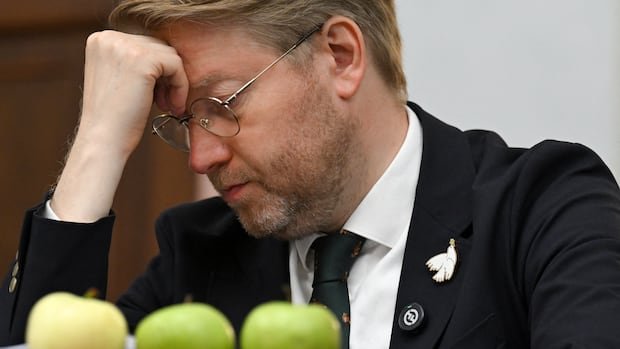

Russia’s top court directed the removal of the sole party against the Kremlin’s military involvement in Ukraine from the upcoming parliamentary election ballot. The Supreme Court invalidated the registration of Yabloko, which translates to “apple” in Russian, following a challenge from a pro-Kremlin party. Initially permitted by the Central Election Commission alongside 10 other parties, Yabloko, once a prominent liberal voice in parliament critical of the government, lost its parliamentary seats as the Kremlin tightened its control over Russian politics.
Yabloko, the only registered opposition party opposing the deployment of troops to Ukraine, saw its campaign centered on peace and diplomacy slogans such as “For a ceasefire agreement, diplomacy and peace!” and “For a Russia free from fear and political repressions!” Grigory Yavlinsky, a veteran liberal politician and co-founder of Yabloko, expressed disappointment over the court ruling and announced the party’s intention to appeal.
Various Russian opposition figures in exile, including Yulia Navalnaya, widow of Kremlin critic Alexei Navalny, supported Yabloko due to its anti-war stance. The party’s chairman, Nikolai Rybakov, sought to distance Yabloko from external support from Kremlin opponents, emphasizing the party’s commitment to Russia’s internal affairs.
The court’s decision to remove Yabloko from the ballot indicated the Kremlin’s discomfort with the party’s platform, which resonated with many Russians. Yavlinsky highlighted the significance of their stance on peace and freedom, emphasizing the strong public demand for change.
Kremlin-aligned parties criticized Yabloko for its stance on Ukraine, with some calling for investigations into the party’s activities. The Motherland Party, the plaintiff in the lawsuit against Yabloko, accused the party of various infractions, including copyright infringement, exceeding campaign spending limits, and undermining Russia’s territorial integrity by opposing the military operation in Ukraine.
Yabloko faced escalating pressure from the Kremlin, resulting in prominent members being jailed or labeled as “foreign agents.” The party’s crackdown intensified as the government tightened control over dissent, reminiscent of Soviet-era suppression. Key members, including Maxim Kruglov and Lev Shlosberg, faced legal challenges and imprisonment, further highlighting the Kremlin’s crackdown on opposition voices within Russia.