
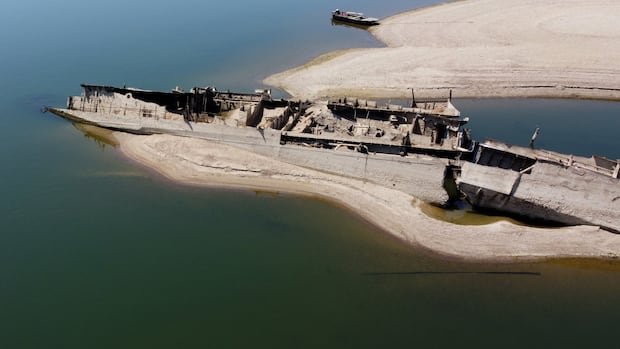

Nazi German warships that were deliberately sunk in the Danube River during World War II are resurfacing due to the dropping water levels, a visible consequence of the intense heat and drought currently affecting Europe. As the fifth heatwave since May approaches, western European countries like Spain, France, and Italy are bracing for scorching temperatures near 40 degrees Celsius, while central and northern Europe are also expected to experience above-average heat.
Recent data from the European Union’s Copernicus climate monitoring service confirms that June and July marked the hottest months on record in western Europe, resulting in an estimated 25,000 heat-related deaths. The severe heat has led to devastating wildfires and significantly reduced water levels in crucial waterways such as the Danube, reaching record lows.
Climate scientists emphasize that the emergence of the exposed warship wrecks serves as a stark reminder of the broader issue at hand. The impact of fossil fuel-induced climate change is amplifying heatwaves and droughts, posing threats to various sectors including agriculture, shipping, and energy systems across Europe. Experts warn that without immediate action to curb greenhouse gas emissions, the situation will only worsen.
Historical records indicate that around 200 Nazi warships were scuttled near the Serbian city of Prahovo in September 1944 to impede Soviet forces. However, the current unusually low water levels have unveiled multiple wrecks, including a German military motorcycle in Hungary and ancient mammoth remains in Bulgaria. The declining Danube water levels have raised significant concerns for countries along the river, prompting measures to sustain essential services like nuclear power plants that rely on adequate water supply.
The unprecedented events unfolding in Europe this summer, from extreme heat to water shortages, underscore the urgent need for better environmental stewardship. Climate experts warn that the current heat extremes are exacerbated by climate change, with rising temperatures and droughts reinforcing each other. The drying Danube river is just one tangible example of the escalating impacts of global warming, with potential severe consequences for ecosystems and livelihoods.
Looking ahead, experts predict that next year could bring even hotter temperatures, fueled by ongoing climate change and potential global weather patterns influenced by a super El Niño event. The urgency to address greenhouse gas emissions is paramount to mitigate the escalating impacts of climate change and prevent further environmental crises.