
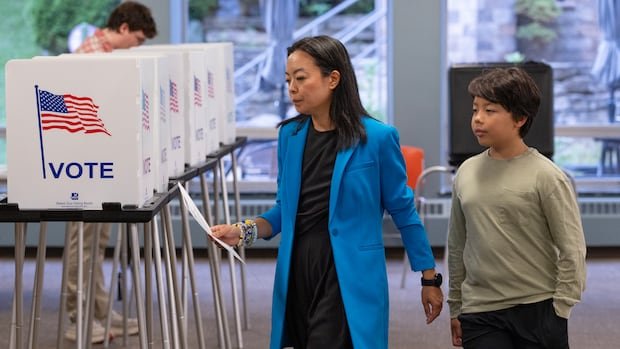

As the U.S. approaches the midterm elections, a rigorous primary season has deepened the divide between the insurgent progressive and centrist factions within the Democratic Party. The battle for Congress this November and the presidency in 2028 hangs in the balance.
Centrists advocate for moderate and practical policies to capture seats from Republican control, while progressives argue that uninspiring establishment candidates will not energize a coalition of young people, the working class, and diverse voters essential for the party’s success.
Hans Noel, an associate professor of Government at Georgetown University and co-director of the Georgetown Democracy Initiative, expressed uncertainty about which faction holds greater appeal, emphasizing the potential of progressive candidates to attract new voters despite potentially alienating some traditional Democratic supporters.
The primary season, where Democratic voters select candidates for upcoming general elections against Republicans, has witnessed victories, losses, and valuable lessons for both sides.
In a recent primary in Wisconsin, progressives suffered a setback when moderate David Crowley narrowly defeated self-described Democratic Socialist Francesca Hong for the governor’s ticket. Hong faced criticism for past statements supporting defunding the police and abolishing ICE, along with controversial remarks about canceling Thanksgiving.
Progressives faced similar challenges in races in Washington and Missouri, where moderates successfully fended off progressive challengers. However, in Michigan, progressive candidate Abdul El-Sayed secured a win against centrist candidate Haley Stevens, despite significant financial support for Stevens.
El-Sayed campaigned on platforms such as medicare for all, campaign finance reform, and a shift in military aid policy. His victory highlighted the appeal of progressive ideals among voters.
The discontent among young voters towards the Democratic Party’s leadership was evident in El-Sayed’s victory, signaling a significant shift in the party’s dynamics. Progressive wins in key battleground states have sparked debates about the party’s future direction.
While progressives reassess their positions to appeal to a broader voter base, moderate Democrats caution about potential risks in swing states. The ongoing debate between the left and the center within the Democratic Party underscores the challenges of balancing ideological stances with electoral viability.
As the midterm elections draw near, the Democrats face a crucial test of their strategy and appeal to voters. The outcome of the elections will determine the party’s trajectory and set the stage for the 2028 presidential race.