
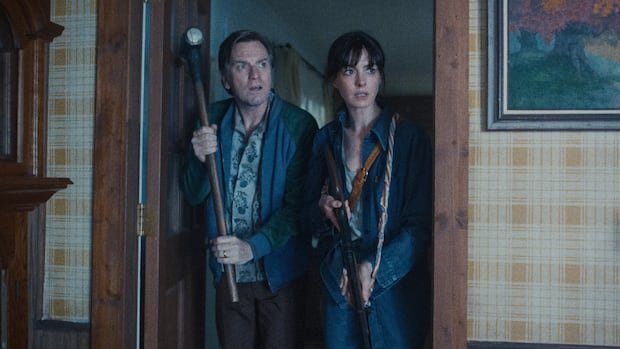

In 1982, housewives may find themselves concerned about various family issues, such as their kids interacting with peers and dealing with a spouse’s reluctance to fulfill household responsibilities. However, imagine the additional stress of mysterious blue lights, intense heat, and even a dinosaur tail appearing in your backyard on Oak Street. This is the premise of “The End of Oak Street,” a film directed by David Robert Mitchell and starring Anne Hathaway as Denise, offering a mix of Spielbergian and Stephen King-esque vibes.
The story revolves around a typical yet troubled Detroit family, including the aloof but caring father Greg (played by Ewan McGregor), the talented but despondent elder sister Audrey (portrayed by Maisy Stella), and the boy-next-door little brother Brian (enacted by Christian Convery). This family dynamic sets the stage for a nostalgic 80s adventure reminiscent of classic Spielberg films, as acknowledged by many critics and moviegoers seeking a refreshing break from darker, more intense cinema.
While “Oak Street” has its moments of fun and originality, it falls short of being the anticipated summer blockbuster. The film appears to mimic Spielberg’s signature style without fully grasping the underlying themes and intentions that made his works impactful. This disconnect is evident in the superficial character developments and lack of depth in exploring the family’s internal conflicts amidst the prehistoric chaos.
Despite its engaging sequences, “The End of Oak Street” struggles to provide a compelling reason for audiences to invest in the characters’ journey. The repetitive dinosaur attacks and lack of substantial growth leave viewers wanting more depth and substance from the narrative. While the film pays homage to iconic Spielberg elements, it falls short of delivering a truly resonant and meaningful story, raising questions about its overall impact and lasting impression on viewers.
In essence, “Oak Street” may entertain with its spectacle of dinosaurs and action, but it misses the mark in creating a truly memorable and thought-provoking cinematic experience. The film’s reliance on familiar tropes and visuals without offering a fresh perspective may leave audiences yearning for more substance and emotional depth in their movie-watching experience.