
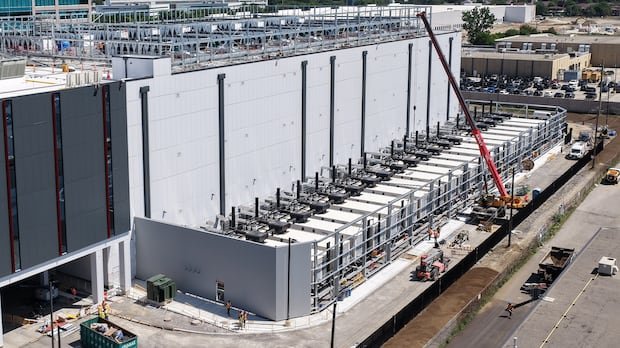

Ontario Premier Doug Ford unveiled the province’s fresh data center framework on Thursday, emphasizing its role in safeguarding Canadian data within the country. The framework evaluates data center approvals based on three core principles: economic development, data security and sovereignty, and community investment along with public trust.
During the announcement in Guelph, Ford stated that the government’s new data center playbook aims to foster future economic growth, boost tax revenues, and generate numerous job opportunities. The framework mandates data centers to fully cover their electricity consumption costs, encouraging them to establish their power generation systems. Additionally, a distinct rate class will be set for large new data centers, higher than the current industrial rate programs, with no additional costs for Ontario residents.
Ford also emphasized that the province will not provide financial incentives to attract investments. The framework is projected to be a significant driver of Ontario’s artificial intelligence (AI) strategy, forecasted to yield economic growth of $122 billion by 2035 and create 17,000 new jobs annually.
In parallel, discussions have arisen in various municipalities across the province regarding moratoriums on data centers, with Oakville recently implementing a one-year pause and Mississauga set to vote on a similar measure in September.
Green Party of Ontario leader Mike Schreiner recently called for a halt on data centers, expressing concerns about corporations benefiting from local resources to the detriment of Ontario communities. The province aims to prioritize data centers utilizing closed-loop systems, which recycle water to reduce consumption.
Despite the provincial initiative, Schreiner believes that the playbook lacks sufficient details and stringent regulations, advocating for stronger measures to protect communities from data centers’ impacts. He stressed the importance of community control over tech corporations in shaping the future landscape of data centers.
In another development, Coun. Colleen James proposed an information report for the Region of Waterloo council to gain insights into the development, economic, and environmental implications of data centers in the region. This initiative reflects a broader effort to understand and address the evolving landscape of data center expansion in the area, highlighting the need for community-centered safeguards.